
London to Brussels in 2026: Train, Plane, Car or Coach?
Planning a trip from London to Brussels is easier than many travellers expect. But many people discover that travelling from London to Brussels is only part of the journey. Your train or flight may bring you to Brussels. Yet, your actual destination could be a hotel in the city centre, a business district on the outskirts, or another Belgian city altogether.
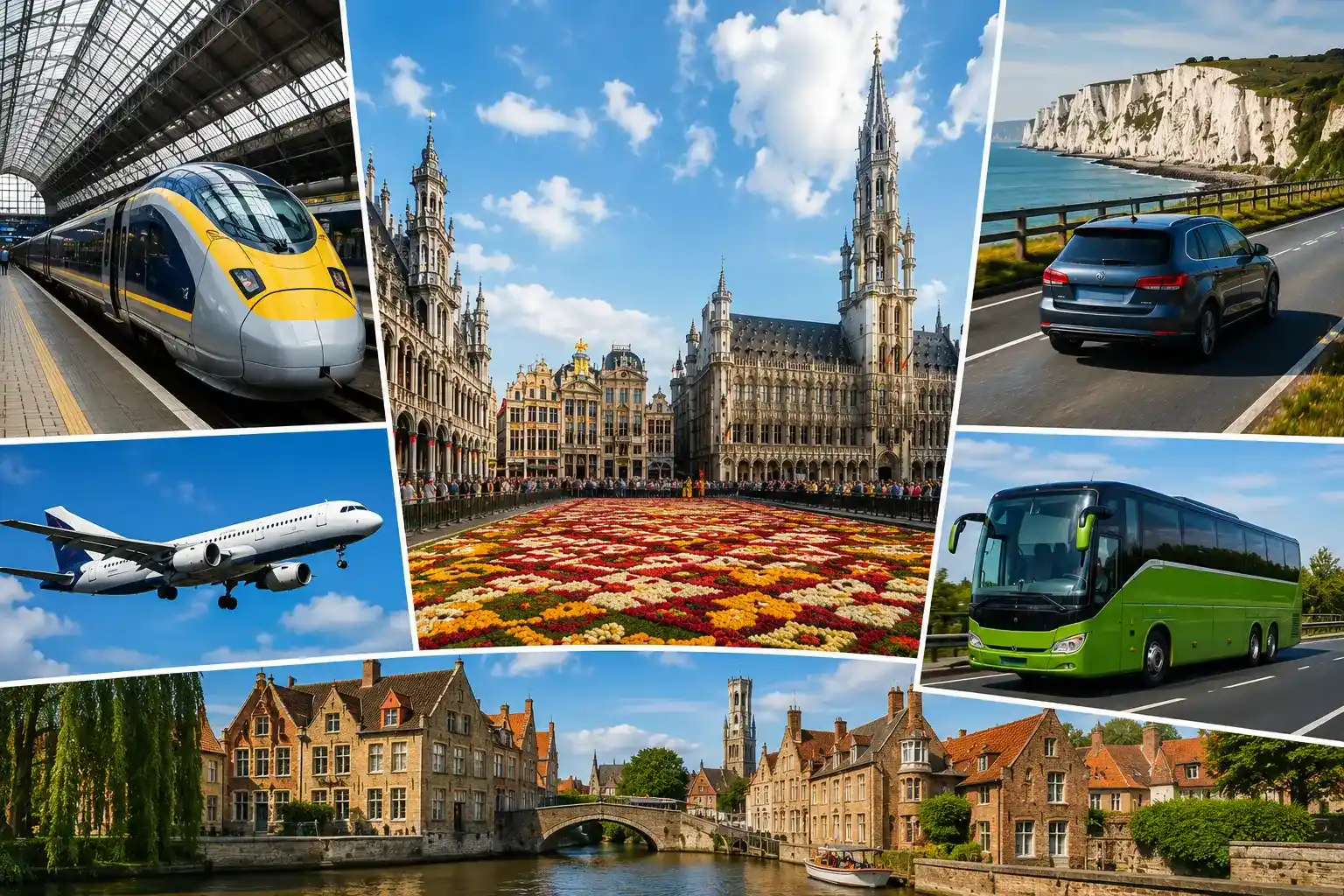
There are several ways to make the journey. The most popular option is the Eurostar, which connects London St Pancras International with Bruxelles-Midi in just a few hours. You can also choose from various flights to Brussels, travel by car via the Channel Tunnel or ferry routes, or take a long-distance coach.
This guide covers every major transport option, comparing travel times, convenience and costs. More importantly, it looks at what happens after you arrive. From reaching your hotel to continuing your trip beyond Brussels to destinations such as Bruges, Ghent or Antwerp, we’ll walk you through the entire journey from start to finish.
From London to Brussels by Eurostar
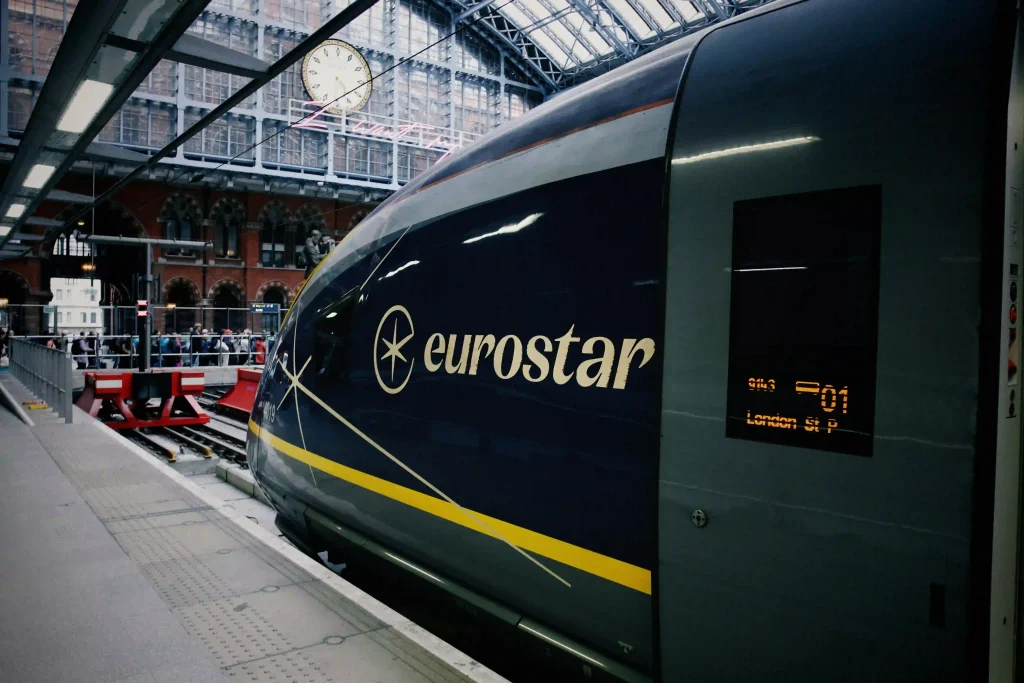
For most travellers, the Eurostar to Brussels is the easiest and most comfortable way to make the journey. Trains run directly from London St Pancras International to Bruxelles-Midi, the city’s main international railway station. Because both stations are located in the centre of their respective cities, the train often feels faster than flying, especially on shorter trips.
Quick Facts
- Route: London St Pancras International → Bruxelles-Midi (Brussel-Zuid)
- Journey time: from around 1 hour 55 minutes
- Frequency: multiple departures daily
- Typical fares: from around £39 when booked well in advance
- Best for: city breaks, business travel, travellers with luggage
One of the biggest advantages of the London to Brussels train is simplicity. You check in at St Pancras, complete passport control before departure, and arrive in Brussels ready to continue your journey without airport transfers or long waits at baggage reclaim.
Prices can vary significantly. Eurostar promotes advance fares from around £39 one way, but popular dates and peak travel times can cost considerably more. If you’re planning a weekend getaway or travelling during school holidays, booking several weeks ahead usually gives you the best choice of fares.
The Eurostar London to Brussels route is particularly convenient if your final destination is Brussels itself. But many tourists discover that arriving at Bruxelles-Midi is only part of the journey. You may still need to reach a hotel across the city, catch a late connection, or continue on to Bruges, Ghent or Antwerp. That’s why it’s worth thinking about your entire route before booking, not just the train ticket.
From London to Brussels by Plane
Although the train gets most of the attention, flights to Brussels can still be a good option in certain situations. If you live outside London, find a particularly cheap fare, or need to travel at a specific time, flying may work better than taking the train.
Most flights from the UK arrive at Brussels Airport, also known as Zaventem. Located around 12 km from the city centre, it is Belgium’s busiest airport and offers direct rail connections to Brussels as well as easy onward travel across the country.
Another option is Brussels South Charleroi Airport. Low-cost airlines often use Charleroi, which can help keep ticket prices down. The catch is that the airport is much further from Brussels, so you’ll need additional travel time after landing.
A one-hour flight sounds faster than the train on paper. In reality, the difference is often smaller once you factor in getting to the airport, security checks, boarding and the journey from the airport after arrival. That’s why many travellers compare the entire door-to-door journey rather than the flight time alone.
Where flying does have an advantage is flexibility. With several airports serving London and multiple airlines operating the route, it can sometimes be easier to find a departure that fits your schedule.
And just like with the train, arriving in Belgium is only part of the journey. If you’re landing at Zaventem and heading straight to a hotel, meeting or another city, it’s worth planning your onward transport in advance. Options range from public transport and standard taxis to a pre-booked airport transfer, particularly useful if you’re travelling with luggage or continuing directly to destinations such as Bruges, Ghent or Antwerp.
For airport facilities, transport information and live travel updates, visit the official Brussels Airport website.
By Car or Coach
Travelling from London to Brussels by car gives you the most flexibility, especially if you’re planning to explore several places in Belgium. The journey usually involves crossing the Channel via the Eurotunnel Le Shuttle service or a ferry route before continuing through northern France into Belgium. Depending on traffic, border conditions and your starting point, the trip typically takes between five and seven hours.
Driving can be a good option for families, road-trip enthusiasts and travellers carrying lots of luggage. On the other hand, you’ll need to factor in fuel costs, tolls, parking fees and the challenge of driving in an unfamiliar city.
If you’re looking for a budget-friendly alternative, long-distance coaches such as FlixBus also connect London and Brussels. Fares can be very competitive, particularly when booked in advance. The downside is the journey time, which is often considerably longer than both the train and a flight.
For most visitors, the choice comes down to priorities. If speed matters, the train usually wins. If flexibility is more important, driving may be worth considering. And if keeping costs as low as possible is your main goal, a coach can still get you from London to Belgium without breaking the budget.
Arriving in Brussels: Getting from the Station or Airport
This is the part many people don’t think about until they arrive.
The Eurostar to Brussels brings you to Bruxelles-Midi, while a flight leaves you at Brussels Airport or Charleroi. Either way, your journey usually isn’t over yet. Your hotel might be across the city, your meeting could be in the European Quarter, or you may be heading straight to another destination in Belgium.
Once you arrive, you have several options for covering that final stretch:
- Metro and trams are usually the cheapest option for getting around Brussels. They work well if you’re travelling light and staying near a public transport stop.
- Regular taxis are easy to find at Brussels Airport and outside Bruxelles-Midi. They’re convenient, but fares can vary depending on traffic and distance.
- Uber and ride-hailing services are available in Brussels and can be useful for city journeys, although availability and pricing fluctuate throughout the day.
- Pre-booked transfers offer a fixed price and a driver waiting for you on arrival. This option is particularly useful if you’re carrying luggage, arriving late at night, travelling with family, or heading directly to another city.
For many visitors, public transport is perfectly adequate. But after a long train ride or flight, dragging a suitcase through busy stations and changing lines isn’t always appealing. That’s why some travellers prefer a private transfer from Brussels Airport or a door-to-door service from Bruxelles-Midi, especially when their final destination isn’t actually Brussels itself.
And that’s more common than you might think. Many people arrive in Brussels only to continue their trip to Bruges, Ghent or Antwerp.
Travelling Beyond Brussels: Bruges, Ghent, Antwerp
Here’s something many first-time visitors don’t realise: Brussels is often just a stop along the way.
A large number of travellers making the London to Brussels journey aren’t actually staying in the capital. They’re heading to Bruges for its canals and medieval streets, Ghent for its lively atmosphere, or Antwerp for shopping, culture and business. Some people even search for London to Bruges trips without realising that the journey almost always starts in Brussels. Many travellers searching for the Eurostar to Bruges are surprised to learn that the high-speed train terminates in Brussels. From there, you’ll need to continue by train, taxi or airport transfers to Bruges.
The challenge is that neither the Eurostar nor most flights take you directly to those destinations. After arriving at Bruxelles-Midi or Brussels Airport, you’ll still need to continue your trip.
Public transport works well, but it can involve extra steps. Taking the Brussels to Bruges train means finding the correct platform, checking departure times and managing luggage through a busy station. The same applies to journeys from Brussels to Antwerp or Ghent. If you’re travelling with children, carrying several bags, or arriving late in the day, those extra connections can feel longer than they look on a map.
That’s where a door-to-door transfer becomes a practical alternative. Instead of navigating another station, you can be collected directly from the airport or Bruxelles-Midi and driven straight to your destination at a fixed price.
For example, travellers continuing to Bruges from Brussels Airport or booking a direct transfer to Antwerp can avoid the extra planning that comes with train connections. The same applies to Ghent and many smaller towns that aren’t served by direct international services.
Belgium’s rail network is excellent, and for many travellers it remains the best choice. Information on routes and schedules is available from the official SNCB/NMBS website. But if your priority is getting from the station or airport straight to your final destination, especially with luggage, a pre-booked transfer can turn a multi-step journey into a single ride.
Last-Mile Options Compared
The best option depends on where you’re going. If you’re staying in central Brussels with a small backpack, public transport is usually the cheapest choice. If you’re travelling with luggage, arriving late at night, or continuing to another city, convenience can become just as important as cost.
The table below compares the most common ways to get from Bruxelles-Midi or Brussels Airport to your final destination.
A fixed transfer won’t always be the best solution. If you’re travelling a short distance within Brussels and know your way around the public transport network, the metro or train may be all you need.
Where a transfer tends to make the biggest difference is on longer journeys, airport arrivals, and trips involving multiple bags. Knowing the price in advance and being driven directly to your hotel, apartment or destination city removes several extra steps from the journey.
If you’re comparing providers before booking, our guide to 5 Best Airport Transfers in Belgium looks at the main options available and explains which services are best suited to different types of travellers.
Frequently Asked Questions
How long is the train from London to Brussels?
The fastest Eurostar services take around 1 hour and 55 minutes. Journey times can vary slightly depending on the specific departure, but most direct trains take between two and two and a half hours from London St Pancras International to Bruxelles-Midi.
How much does the Eurostar to Brussels cost?
Eurostar tickets can start from around £39 one way when booked well in advance. Prices vary depending on demand, travel dates, departure times and availability, so booking early usually gives you the best fares.
Do I need a passport to travel from London to Brussels?
Yes. Since the UK is no longer part of the European Union, British travellers need a valid passport to enter Belgium. Passport checks take place before boarding the train or flight, so make sure your travel documents are valid before departure.
How do I get from Brussels-Midi to the city centre?
The easiest options are the metro, tram, taxi or ride-hailing services. Brussels-Midi is well connected to the city centre, and most journeys take around 10 to 20 minutes depending on your destination and mode of transport.
How do I get from Brussels Airport to Bruges or Antwerp?
You can travel by train, coach, taxi or private transfer. Direct rail connections make both cities accessible from Brussels Airport, while a door-to-door transfer can be more convenient if you’re travelling with luggage, arriving late, or heading directly to a hotel or business address.
Make Your Journey Beyond Brussels Easier
Getting from London to Brussels is the easy part. The bigger question is how you’ll reach your final destination once you arrive.
If you’re staying in Brussels, public transport, taxis and ride-hailing services offer plenty of options. But if you’re travelling with luggage, arriving after a long journey, or continuing to Bruges, Ghent, Antwerp or another destination in Belgium, planning your last mile in advance can save both time and effort.
A pre-booked transfer takes you directly from Brussels Airport or Bruxelles-Midi to your hotel, business address or next city, with a fixed price and no need to navigate unfamiliar stations after arrival.
Book your transfer in Belgium and continue your journey with confidence, from the moment you arrive to the moment you reach your destination.