
The Historic Cities of Medieval Belgium: A First-Timer’s Guide
Most people experience medieval Belgium without really noticing it. They rush through on a train between Paris and Amsterdam or change platforms in Brussels on the way somewhere else. That is a mistake.
Few places in Europe preserve so much of their medieval past so densely and so naturally. This is not history locked behind museum glass. It is history that still functions as a city. Merchants’ squares remain gathering places, centuries-old towers still dominate skylines, and streets laid out hundreds of years ago continue to shape everyday life. Add to that Belgium’s 16 UNESCO World Heritage properties, many of them spread across multiple historic locations, and a different picture of the country begins to emerge.
At Airport Taxis, we see this every day – travellers arriving in a hurry, heading straight for Bruges or Brussels without realising what’s actually around them. The key is knowing how to look. The best way to understand Belgium’s medieval cities is not as a checklist of attractions, but as chapters of a larger story.
How These Cities Got So Rich and So Beautiful
To understand Belgium’s historic cities, you have to follow the money.
Between the 11th and 13th centuries, the towns of medieval Flanders. became some of the richest places in Europe. Their wealth did not come from royal courts or military victories. It came from cloth.
Ships crossed the North Sea carrying fine English wool from regions such as the Cotswolds and Lincolnshire. In cities like Ghent and Bruges, that wool was transformed into one of the most valuable products on the continent. A single bale could set an entire urban economy in motion:
- merchants imported raw wool from England;
- spinners, dyers, and weavers turned it into luxury cloth;
- guilds controlled quality and regulated trade;
- traders exported finished textiles to markets across Europe.
Flemish cloth became a symbol of quality from London to Venice. Behind the beauty visitors admire today stood something far less romantic: the clatter of looms, the smell of wet wool, crowded warehouses along the canals, and merchants arguing over prices in busy market squares.
But prosperity did not create harmony. The people who produced the wealth wanted a greater share of it. Ghent experienced major labour unrest in 1252 and again in 1274, while large-scale weavers’ strikes spread across Flanders in 1280-81. Guilds grew stronger, towns became more confident, and urban communities increasingly challenged the authority of nobles and princes.
That confidence changed the skyline.
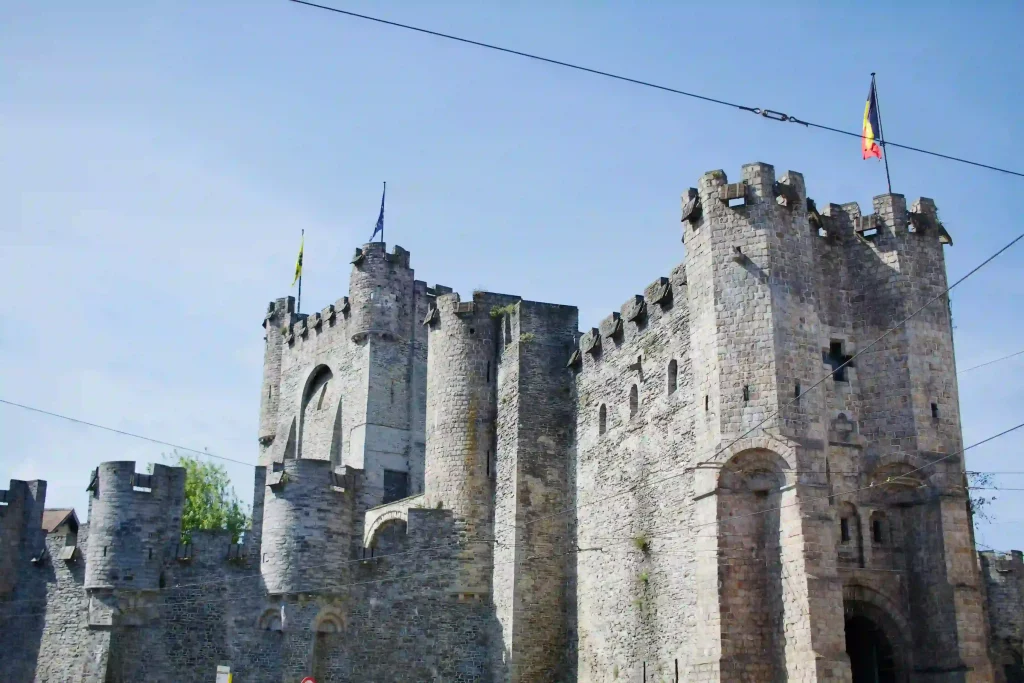
Across Belgium, the most distinctive medieval towers are not castles or church spires but belfries. Unlike a cathedral tower, a belfry was a civic building a symbol of urban freedom and self-government. Its bells announced markets, warned of danger, and marked the rhythm of city life. More importantly, they reminded everyone that these prosperous towns governed themselves. Today, around thirty-three Belgian belfries form part of a UNESCO World Heritage listing.
The wealth of Flanders also left other lasting monuments:
- soaring belfries that proclaimed civic independence;
- vast cloth halls where fortunes were made;
- grand market squares designed to impress traders and rivals alike.
At least seventeen medieval cloth halls survive today, the most famous being the immense Lakenhalle in Ypres. These buildings were not created for tourists. They were the headquarters of commerce itself.
This is the lens that makes Belgium suddenly understandable. Once you know the story, you stop seeing picturesque streets and start seeing the fortunes that built them. The beauty of Belgium is not decorative. It is earned. Every belfry, every guild house, every stone façade is wealth made visible – every florin frozen in stone.
The Cities, Read Through Their History
Once you understand where the wealth came from, Belgium’s cities stop looking similar. Each one tells a different chapter of the same story.
Bruges: The City That Froze in Time
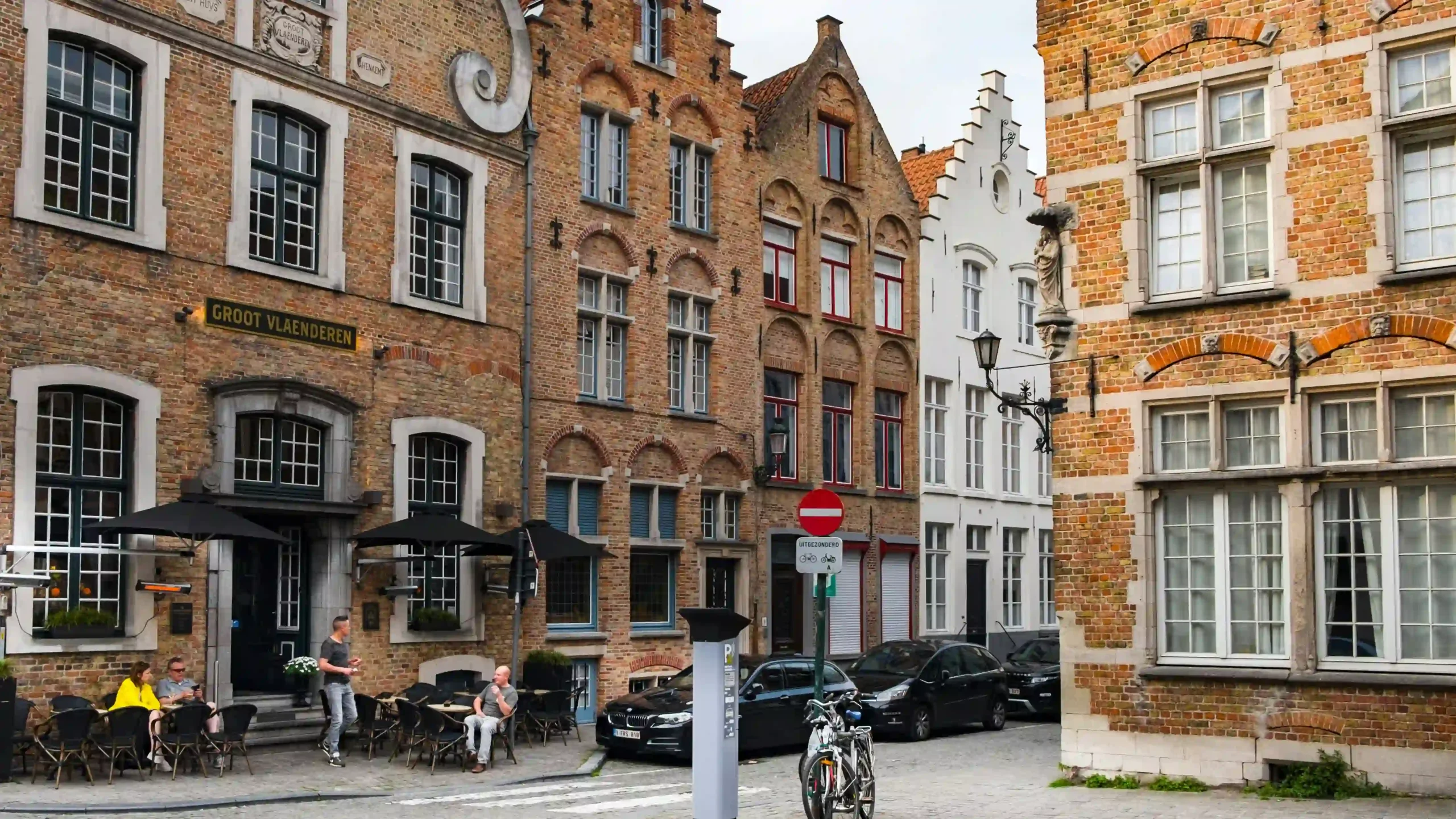
Bruges is the city most people imagine when they think of medieval Belgium. Canals slip between brick houses, church towers rise above the rooftops, and the historic centre – a UNESCO World Heritage Site since 2000 – feels almost impossibly intact.
But Bruges is not beautiful because it was preserved on purpose. As its role in European trade faded, the city largely escaped the rebuilding that transformed many other urban centres.
For centuries, Bruges was one of the great Hanseatic gateways of northern Europe. Merchants from across the continent traded here, fortunes changed hands here, and ships connected the city to markets stretching far beyond Flanders. Then access to the sea gradually silted up. Wealth flowed elsewhere.
Paradoxically, that decline became Bruges’ greatest gift. While other cities rebuilt and modernised, Bruges remained largely untouched. Walking through its centre can feel like stepping into a fifteenth-century painting that was never finished. It is also the busiest of Belgium’s historic cities.
Many visitors arrive for a day trip, but the city reveals itself best in the quiet hours before the crowds appear. If you’re heading directly from the airport to the historic centre, a Bruges airport transfer often saves time, especially since the railway station sits outside the old core.
Ghent: The Rebel Giant
If Bruges is a preserved masterpiece, Ghent is a city that never stopped living.
In the fourteenth and fifteenth centuries, it was one of the largest and wealthiest cities north of the Alps. Its merchants grew rich from trade, its guilds became politically powerful, and its citizens developed a reputation for resisting anyone who threatened their independence.
Ghent’s skyline is dominated by its famous belfry, the tallest in Belgium, rising around 91 metres above the city. Yet what makes Ghent memorable is not a single monument but its energy. Students, workers, cyclists, and residents still fill streets that were already busy when Bruges was at its commercial peak.
The city feels less polished and more confident in itself. Many travellers coming straight from the airport choose a Ghent airport transfer to get directly into the heart of the city rather than navigating connections after a flight.
Antwerp: The Ambitious Successor
When Bruges declined, Antwerp stepped forward.
The wealth that once flowed through Flemish canals increasingly gathered around the Scheldt River, and by the sixteenth century, Antwerp had become one of Europe’s great commercial capitals. This was a city of printers, merchants, bankers, and international traders. Later, it would become synonymous with the diamond trade.
Where Bruges feels contemplative and Ghent feels defiant, Antwerp feels ambitious. Its Golden Age was built on the confidence of a city that knew it had inherited the future.
For a broader introduction to the region’s heritage, the official Visit Flanders website offers useful background on many of the places that shaped this story.
Mechelen and Leuven: Looking Beyond the Famous Names
Not every chapter of medieval Belgium was written by giants.
In Mechelen, the unfinished ambition of St Rumbold’s Tower still defines the skyline. Rising to around 97 metres and reached by more than five hundred steep steps, it was originally intended to soar even higher. The project was never completed, leaving behind a monument to a city’s grand aspirations.
Leuven tells a different story. Home to a university founded in 1425, it combines centuries of academic history with one of the youngest atmospheres in Belgium. Medieval foundations and student life coexist with surprising ease.
And once you’ve seen these places, you may find yourself curious about the smaller towns most visitors skip, where the story of medieval Belgium continues far beyond its most famous names.
At its heart, the Bruges Ghent history story is not really about two cities at all. It is the story of how medieval Flanders became one of Europe’s richest regions, and how that wealth transformed brick, stone, and ambition into the urban landscapes visitors still admire today.
When to Go & Getting Around By Mood and By Train
The best time to visit Belgium depends less on the weather and more on the atmosphere you’re looking for.
Winter transforms medieval squares and courtyards into Christmas markets lit by fairy lights and the glow of wooden stalls. Spring and autumn are often the sweet spot: quieter streets, softer crowds, and that golden light that seems to linger on old brick façades. Summer brings festivals, outdoor cafés, and long evenings – but also the largest crowds, especially in Bruges.
For many first-time visitors, the most rewarding months fall between April and June or from September into early October, when the cities feel busy enough to be alive but not overwhelmed.
Getting around is refreshingly simple. Belgium’s historic cities are close together, and driving often creates more problems than it solves in medieval centres built long before modern traffic.
Instead, think of the railway network as a shortcut through history. In the Middle Ages, Bruges, Ghent, Antwerp, and Leuven competed like rival city-states, each fighting for trade, influence, and prestige. Today, you can move between them in comfort, often in less time than it takes to cross a large capital city.
A few useful things to know:
- Brussels to Bruges takes around one hour by direct train.
- A standard second-class ticket is typically around €17.60 one way.
- Domestic trains operate on a turn-up-and-go system – no seat reservations required.
- Direct services via Ghent run frequently throughout the day.
- If possible, avoid slower routes that detour through smaller junctions.
The national rail operator, SNCB, makes planning straightforward. Most travellers will use stations such as Brussels – Midi/Zuid, Gent-Sint-Pieters, and Brugge.
In practical terms, the train is usually the smartest answer to the question of how to travel Belgium by train. Historically, it is the easiest way to move between cities that once spent centuries trying to outshine one another.
Arriving: Airports and the First Hour
Your first hour in Belgium matters more than it seems. After a flight, a queue, and a bag carousel, even the most beautiful medieval city can feel harder to love if you arrive tired, late, or unsure where to go next.
Most international travellers land at Brussels Airport in Zaventem, the country’s main airport, around 12 kilometres from central Brussels. It is the simplest arrival point for most itineraries, especially if you plan to continue by train to Bruges, Ghent, Antwerp, or Leuven.
Charleroi Airport is different. It serves many low-cost flights and can look cheaper when you book, but it sits around 55 kilometres from Brussels. Once you add the longer journey, waiting time, and onward connections, the saving may feel smaller than it looked on the flight search page.
That is where planning the first transfer can be worth it. A Brussels Airport transfer makes sense if you want a calm, direct start from Zaventem, while a Charleroi Airport transfer can be especially useful when your flight lands late, your hotel is not near a station, or you are travelling with luggage.
Antwerp Airport and Ostend-Bruges Airport are much smaller options, both sitting close to their respective cities, but schedules change more often, so check current routes before relying on them.
The goal is simply to protect the beginning of the trip. You are about to meet cities that have been waiting for 700 years. It is nicer to arrive with enough energy to notice them.
A Simple History-First Route (3-5 Days)
If this is your first time in Belgium, resist the temptation to see everything.
The most rewarding route follows the story you’ve just read rather than a map. Start with Brussels as your base and dedicate your time to the heart of medieval Flanders. Choose either Bruges or Ghent as your main destination instead of trying to rush through both in a single day.
Spend three days tracing the origins of Flemish wealth: guild halls, market squares, belfries, and the cities that built their fortunes on cloth. You’ll understand more by slowing down than by adding another stop to your itinerary.
A good rule for first-time visitors is surprisingly simple:
- use one or two bases rather than changing hotels every night;
- take short day trips when curiosity strikes;
- leave room for unplanned discoveries.
If you have two extra days, extend the journey to Antwerp.
Historically, it feels like the natural next chapter. Bruges and Ghent tell the story of medieval Flanders at its peak. Antwerp shows what happened next, when trade shifted, fortunes moved, and a Renaissance port city emerged from the foundations laid centuries earlier. The transition from medieval merchant towns to Antwerp’s sixteenth-century confidence is one of the most satisfying historical arcs in Belgium.
For travellers who prefer an alternative take on the same journey, a slow route from Bruges to Antwerp explores a similar historical corridor at a gentler pace.
The goal is not to cover more ground. It is to give each city enough time to explain itself.
Quick Practical Tips + Final Thoughts
Before you set off, a few small details can make the experience much smoother.
Book popular towers in advance whenever possible. In Bruges, visitor numbers on the staircase are controlled, especially during busy periods.
Don’t underestimate the climb. The Belfry of Bruges has 366 steps, while St Rumbold’s Tower in Mechelen requires tackling 538 – and neither has a lift.
Treat béguinages differently from other historic sites. These peaceful courtyards were once home to religious laywomen and remain residential spaces today. Quiet respect goes a long way.
The thirteen Flemish béguinages were added to the UNESCO World Heritage list in 1998, and the last beguine in the world passed away only in 2013. They are not relics of a vanished world but echoes of one that survived far longer than most people realise.
This is a country that rewards people who slow down. The cities reveal themselves gradually, one market square, one bell tower, one quiet courtyard at a time. Read them through their history and they become far richer than a collection of landmarks.
Plan the route. Leave space for surprises. And when the journey begins, consider letting someone else handle the first hour – at Airport Taxis, you can book your transfer in advance, and start the trip already feeling like the cities have been waiting just for you.
The next seven hundred years can wait a little longer.