
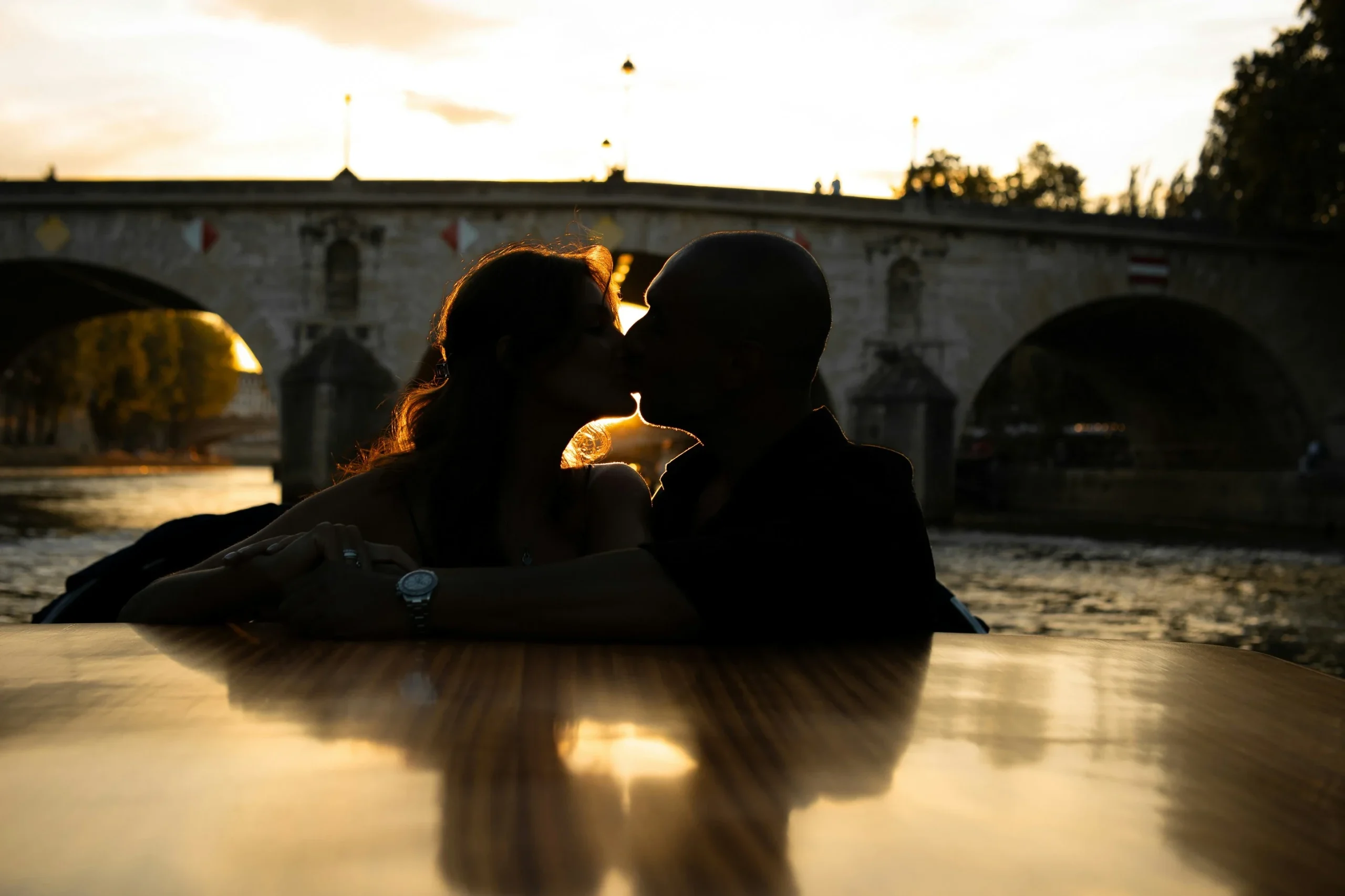
The Most Romantic Road Trip Through Belgium
Belgium is small enough to cross in a morning, which is exactly why it rewards slowing down. This route — Bruges to Antwerp via Ghent, Brussels and Mechelen — covers around 130 kilometres and can technically be driven in under two hours. But that misses the point entirely. Four to five days is the right pace. Long enough to have a slow breakfast in Bruges before the crowds arrive, to get genuinely lost in Ghent on a Tuesday evening, to find the part of Brussels that doesn’t appear on the tourist map. The romance here isn’t in grand gestures — it’s in a canal at dawn, a brewery that’s been in the same spot since the sixteenth century, a medieval square that’s been the centre of city life for six hundred years. Belgium doesn’t perform. It just is, and that turns out to be more than enough.
Route at a glance: Bruges → Ghent → Brussels → Mechelen → Antwerp
Quick Trip Facts
- 📍 Start: Bruges
- 🏁 Finish: Antwerp
- 📏 Total distance: ~130 km
- 🗓️ Best duration: 4–5 days
- ✈️ Fly into: Brussels Airport (Zaventem) or Charleroi
- 🌤️ Best season: April–October
- 🎯 Best for: Medieval architecture, canal towns, food, beer, slow travel
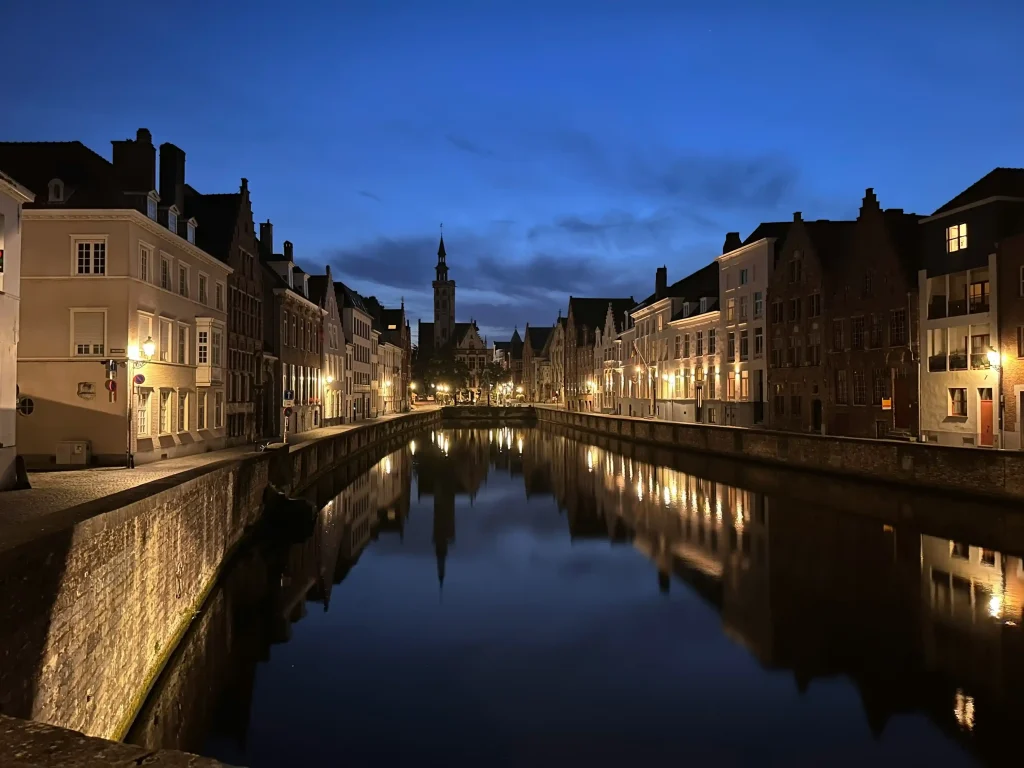
Stop 1: Bruges
If there’s one thing experienced travellers know about Bruges, it’s this: arrive early or arrive late, but don’t arrive at noon on a Saturday in August expecting to have the place to yourself. The city is genuinely beautiful — canals, medieval towers, cobblestones worn smooth by eight centuries of foot traffic — and it draws crowds accordingly. Work with that, not against it.
Stay: Bruges historic centre — everything is walkable from here
Things to do:
- Rozenhoedkaai — the most photographed canal corner in Belgium. At 7am it’s yours. By 11am it belongs to everyone else
- Belfry of Bruges — 83 metres, 366 steps, the best view in the city. Go up to understand the layout before you explore on foot
- Begijnhof — a walled courtyard from the 13th century, five minutes south of the centre. Quieter than anywhere else in Bruges, even in high season
- Minnewater lake — directly below the Begijnhof. Cross the bridge, find a bench, stop for a while
- De Halve Maan brewery — brewing since 1564. They built an underground pipeline across the city rather than relocate. Worth a visit for the tour and the context
Good to know: The historic centre is almost entirely pedestrian. Everything sits within 20 minutes on foot. Bikes are popular but you’ll miss things at cycling speed.
Getting to Bruges Brussels Airport → Bruges: ~95 km · ~55 min Charleroi → Bruges: ~130 km · ~75 min
Most people flying into Belgium book a direct taxi from Brussels Airport to Bruges rather than navigate train connections on day one with luggage. It sets the right tone for the rest of the trip. Same goes for Charleroi — a direct transfer to your hotel door is a different start entirely.
Bruges → Ghent
Distance: 55 km
Time: ~35 minutes
On the way: flat Flemish countryside, quiet farmland, the occasional church spire appearing before the town does.
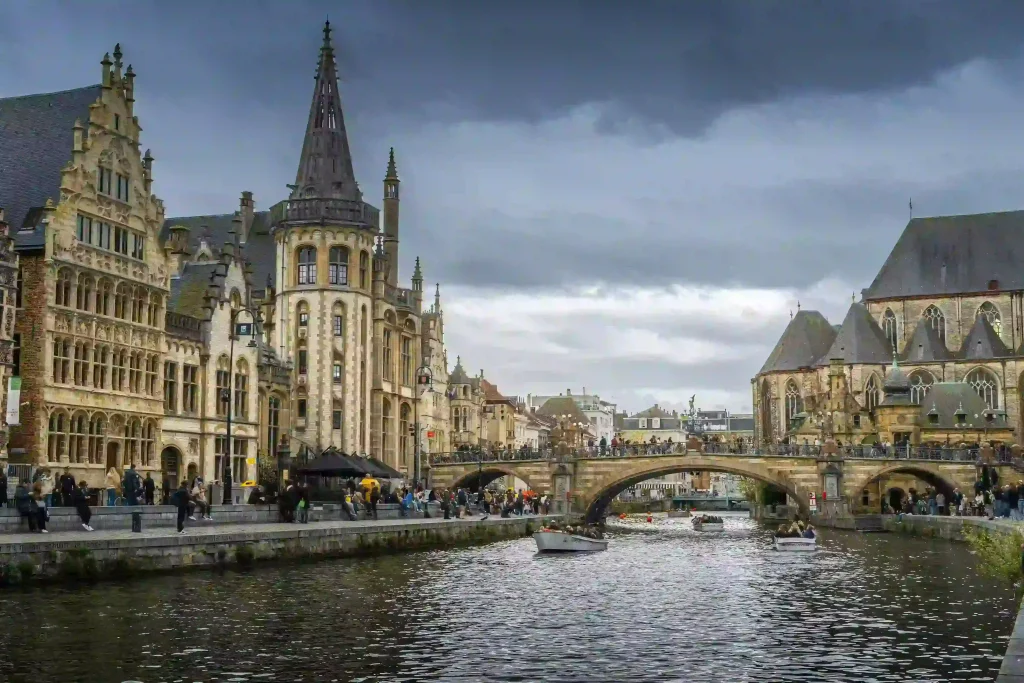
Stop 2: Ghent
Ghent is the city that surprises people who thought Bruges was the whole story. Less visited, less obvious, and completely its own thing. It has a student population of around 70,000 which gives it an energy that the other cities on this route don’t quite match — particularly in the evenings, when the streets around Vrijdagmarkt fill up and the whole place feels genuinely alive rather than performing for visitors.
Stay: Ghent city centre, ideally within walking distance of Graslei
Things to do:
- Graslei and Korenlei — two guild-house lined quays facing each other across the river Leie. The view from Sint-Michielsbrug bridge between them stops people mid-sentence
- Gravensteen castle — built in 1180, ten minutes north of Graslei on foot. Looks exactly as a medieval castle should look, which in Belgium is rarer than you’d expect
- Vrijdagmarkt square — the evening spot. Terraces, locals, the kind of atmosphere that doesn’t feel manufactured
- STAM city museum — if you want to understand how Ghent became Ghent, this is the place. Housed in a former abbey, well presented
Good to know: Ghent hosts the Gentse Feesten every July — ten days, the entire city centre becomes one long open-air festival. One of the largest in Europe. Plan around it or plan for it, but don’t stumble into it unprepared.
Getting to Ghent Brussels Airport → Ghent: ~65 km ~45 min
For those flying directly into Belgium and heading straight to Ghent, an airport transfer from Brussels Airport takes around 45 minutes — no changes, straight to the centre.
Ghent → Brussels
Distance: 55 km
Time: ~40 minutes
On the way: the landscape flattens further, Brussels announces itself with a gradual thickening of suburbs and motorway signs in two languages.
Stop 3: Brussels
Brussels has a reputation problem, mostly among people who spent 48 hours there and didn’t get past the tourist centre. The city rewards patience. It’s messier than Bruges, less immediately charming than Ghent, and considerably more interesting than either if you give it time.
Stay: Sablon neighbourhood or Ixelles — better base than the centre for actually experiencing the city.
Things to do:
- Grand Place — one of the most beautiful squares in Europe. Best on a weekday morning or a summer evening when the cafés spill outside. The gold-fronted guild houses are more over the top than seems reasonable, which is exactly right
- Sablon neighbourhood — ten minutes south of Grand Place. Antique dealers, serious chocolate shops, a weekend market that’s worth getting up early for
- Horta Museum — Victor Horta’s own townhouse on Rue Américaine, the finest Art Nouveau building in a city that does it better than almost anywhere. Book ahead
- Matonge district — Ixelles, Brussels’ African quarter. Different energy, good food, worth an evening
Good to know: Brussels is bilingual — French in most of the centre, Dutch in the northern communes. Don’t worry about it, everyone switches. The food is better than the reputation suggests, especially mussels and frites done properly.
Getting to Brussels Brussels Airport → city centre: ~14 km · ~25 min
The shortest airport transfer on this entire route. An airport taxi in Brussels drops you in the centre in under half an hour — useful to remember if this is where the trip starts or ends.
Brussels → Mechelen
Distance: 25 km
Time: ~20 minutes
On the way: the city gives way quickly, Mechelen appears before you’ve had time to prepare for it.
Stop 4: Mechelen
Most people drive straight from Brussels to Antwerp and never stop in Mechelen. This is a mistake that’s easy to correct. The city is compact, walkable, and has an atmosphere that larger cities spend considerable money trying to recreate. It doesn’t try. It’s just there.
Stay: Mechelen centre — small enough that location barely matters
Things to do:
- Sint-Romboutskathedraal — the Gothic tower that was supposed to be the tallest in the world when construction started in the 15th century. They ran out of money at 97 metres. Still worth climbing
- Grote Markt — one of the best preserved medieval squares in Belgium. In the evening with the terraces open and the cathedral lit, it has the atmosphere that larger cities charge admission for
- Het Anker brewery — Gouden Carolus has been brewed here since the 15th century. They also have a hotel if Mechelen deserves more than an afternoon, which it does
Good to know: Mechelen is Belgium’s carillon capital — the city has been a centre of bell-casting for five centuries. The carillon concerts from Sint-Rombouts are free and worth timing your visit around.
Getting to Mechelen Brussels Airport → Mechelen: ~25 km · ~20 min Brussels → Mechelen: ~25 km · ~20 min
Mechelen → Antwerp
Distance: 25 km
Time: ~20 minutes
On the way: the port infrastructure of Antwerp starts appearing on the horizon well before the city does.
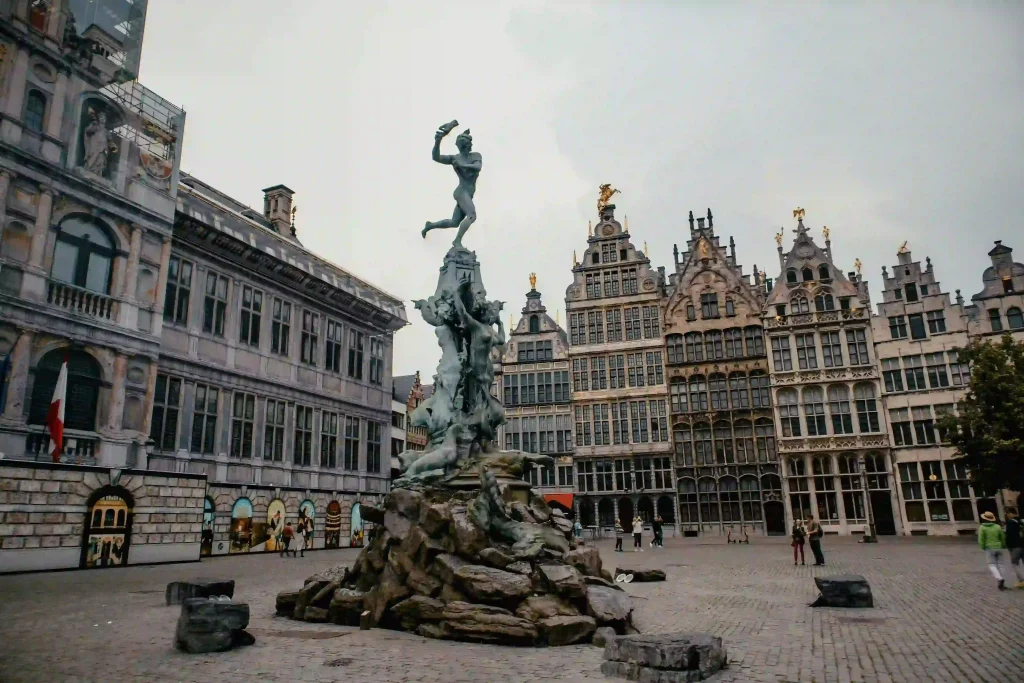
Stop 5: Antwerp
Antwerp is where the route ends, and it earns that position. Port city, diamond capital, fashion centre — three identities that coexist without any of them feeling like a performance. The city has a confidence that’s different to Brussels and an edge that Bruges and Ghent don’t have. It’s the right note to finish on.
Stay: Zuid neighbourhood or city centre — both work, Zuid has better restaurants
Things to do:
- Grote Markt — wider and more theatrical than the others on this route. The 16th century City Hall, the Brabo fountain, the guild houses. The story behind the fountain is stranger than it looks
- Onze-Lieve-Vrouwekathedraal — two Rubens altarpieces inside that justify the entrance fee on their own. Don’t skip this
- MAS museum — rises above the old docks in a building that’s as much a statement as anything inside it. The rooftop is free and the view over the port is worth the climb
- Zuid neighbourhood — galleries, independent restaurants, Antwerp’s design identity. Walk here in the evening
Good to know: The diamond district around Centraal Station processes around 80% of the world’s rough diamonds. You won’t see much of it from the street, but knowing it’s there changes how you read the city.
Getting from Antwerp Antwerp → Brussels Airport: ~50 km · ~35 min Antwerp → Schiphol: ~130 km · worth considering if flying home via Amsterdam
A private taxi from Brussels Airport to Antwerp is around 35 minutes — the most direct way to end the trip without adding unnecessary complications on the last day.
Practical Notes
Belgium’s rail network connects all five cities and works well for solo travellers with light bags. For airport arrivals, early morning departures, or travelling as a group, private transfer across Belgium tends to remove the friction — fixed price, door to door, no platform changes. Parking in the historic centres of Bruges, Ghent and Antwerp is either restricted or expensive. If you’re considering a rental car, factor that in before you go.
FAQs
How many days do you need for this route?
Four to five is the sweet spot. Three is possible but you’ll feel it. Five gives you room to stay longer wherever earns it — and somewhere always does.
Which city on this route is worth the most time?
Depends what you’re after. Bruges rewards an early start and a slow afternoon. Ghent earns an extra evening. Antwerp is the kind of city where you check out and immediately wish you’d booked one more night. If you have a day to spare, give it to whichever of these three speaks to you most on arrival.
Is Mechelen really worth a stop?
Yes, and it’s the most underrated city on the route. Most people drive straight past it between Brussels and Antwerp. The Grote Markt alone justifies an afternoon, and Het Anker brewery justifies staying for dinner. It’s the kind of place that appears on nobody’s list and ends up being the thing people mention first when they get home.
When is the worst time to visit Bruges?
A Saturday in July or August, mid-afternoon. The city is beautiful enough to survive the crowds but you won’t enjoy it. Arrive on a weekday, stay at least one night, and get up early. That’s the whole strategy.
What makes this route “romantic”?
Not romance in the obvious sense — though that works too. It’s more the pace of it. Five cities close enough to feel connected, different enough to feel like separate discoveries. A canal at dawn, a cathedral you weren’t expecting, a brewery that’s been in the same spot for five centuries. Belgium doesn’t try to impress you. That’s exactly what makes it work.
What’s the best airport to fly into?
Brussels Airport sits roughly in the middle of the route and works well for both arrival and departure. Charleroi makes sense if starting in Bruges. Schiphol is worth considering for the return if the trip ends in Antwerp.
Planning Your Trip
✈️ Book flights: Brussels Airport and Charleroi are the two main entry points into Belgium. Compare fares on Skyscanner or Trip.com.
🏨 Book your hotel: Booking.com covers all five cities well. Bruges and Ghent fill up in summer — book early.
🚖 Airport transfer: airport-taxis.be covers Brussels Airport, Charleroi and all cities on this route — fixed price, private, no surprises.