
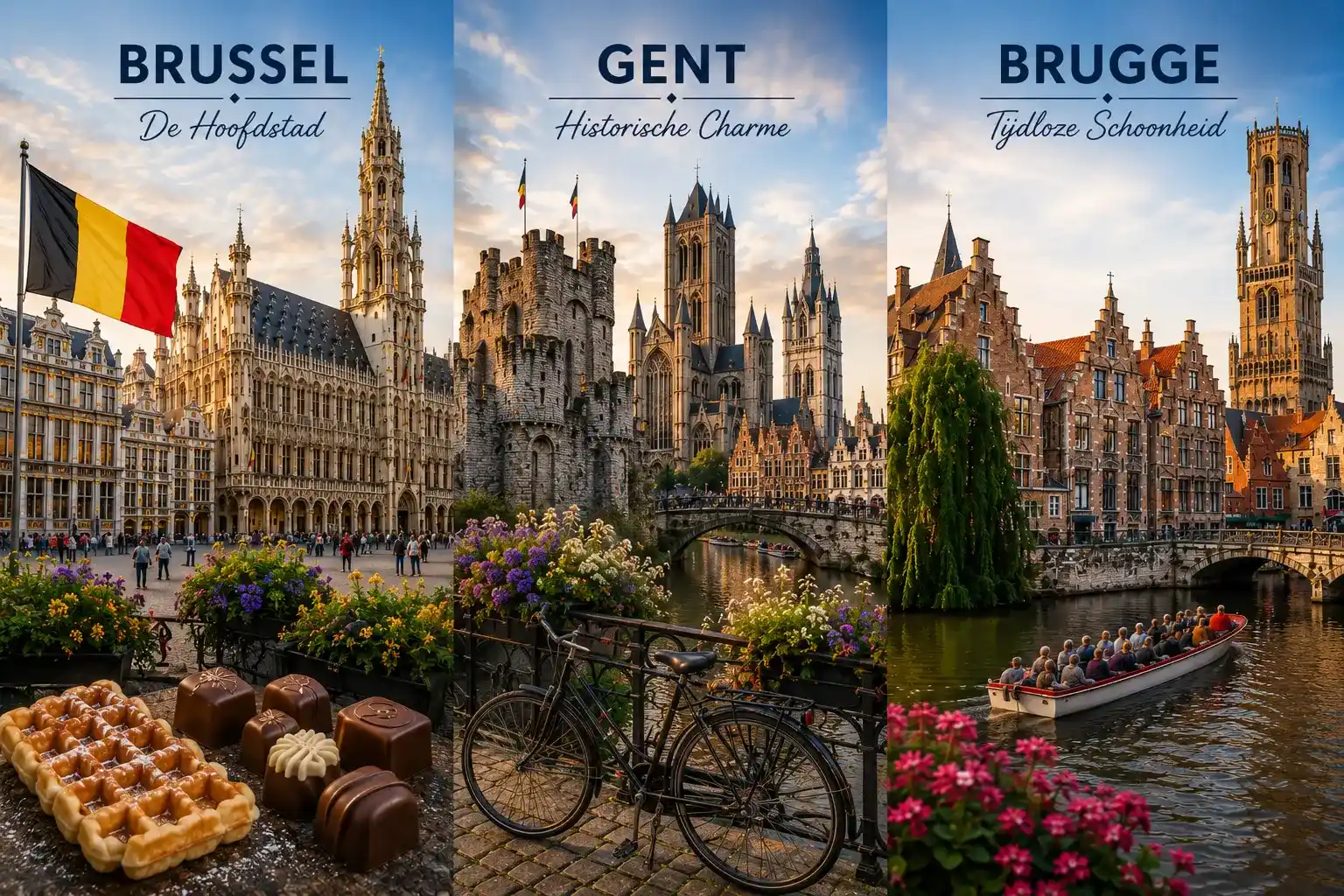
3 Days in Belgium: Brussels, Ghent and Bruges at Their Best
Most 3 days in Belgium itineraries try to cram in four or five cities. It looks efficient on paper. In practice it means more time on platforms, dragging a suitcase over cobbles and squinting at departure boards than actually being anywhere. You come home with a full camera roll and not one city you can really remember.
This one does the opposite. Three cities, one full day each.
Day 1 is Brussels, where the trip starts anyway once you land. Day 2 is Ghent, close enough to reach without effort but different enough to reset the whole mood. Day 3 is Bruges, saved for last, because an early start there shows you a version of the city most day-trippers never see.
The point isn’t to tick off as much as possible. It’s to spend less of the trip in transit and more of it actually in Brussels, Ghent and Bruges.
The Route at a Glance
Here’s how the three days fit together before we go through them one by one.
The order matters. Ghent comes second because it’s half an hour from Brussels and makes an easy day. Bruges is last on purpose: stay the night, walk out at eight the next morning before the coaches arrive from Zeebrugge, and it’s a completely different place.
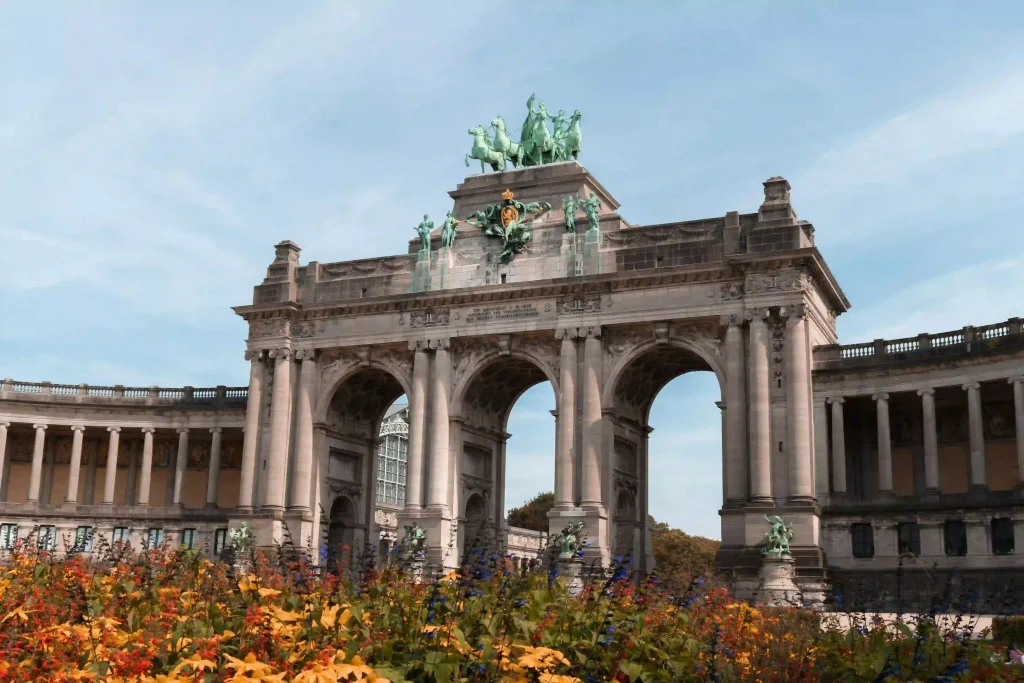
Day 1: Brussels (and Getting There)
Most people land at Brussels Airport, about 20 minutes from the centre by direct train. Travelling light, the train wins: fast, frequent, cheap. After a long flight with suitcases, though, it’s less charming than it sounds. Right platform, bags up, bags down, unfamiliar station, and you haven’t even reached the hotel. That’s where a transfer from Brussels Airport earns its place. Driver meets you, luggage goes in the boot, the trip starts at your door instead of a platform.
Once you’ve dropped the bags, don’t try to see all of Brussels in one afternoon. The city is better wandered than ticked off.
A relaxed first day looks something like this:
- Begin at Grand Place, one of Europe’s most impressive market squares and the perfect place to get your first feel for the city.
- From there, it’s only a short walk to Manneken Pis. It’s worth seeing, though the atmosphere of the surrounding streets is often more memorable than the statue itself.
- Sablon is a good place to slow down, with independent chocolatiers, antique shops and leafy squares offering a welcome contrast to the busy centre.
- The comic murals dotted across the centre. The best ones turn up on ordinary side streets, not next to the landmarks.
- Finish the day in Sainte-Catherine, where locals gather on restaurant terraces and Brussels feels noticeably calmer after the daytime crowds have gone.
Set that pace on day one and you’ll still have the energy for Ghent and Bruges. Try to do everything now and you’ll pay for it later.
Our guide to what to do with a day in Brussels lays out a full walking route with timings, and Visit Brussels has current event listings.
Day 2: Ghent
Ghent is the second stop, not the last, and there’s a reason for that. It’s 30 minutes from Brussels by direct train, easy whether you’re day-tripping or moving hotels. With bigger suitcases, or if you’d rather not think about connections at all, a transfer to Ghent does the door-to-door job the train can’t.
The city runs on a different rhythm to Brussels. It’s younger, thanks to 40,000-odd students, and the history sits comfortably next to busy cafés and terraces rather than under glass. Unlike Bruges, Ghent doesn’t empty when the day-trippers leave. It gets better in the evening, if anything.
Start at Gravensteen. Most medieval castles are all armour and portraits; this one doesn’t shy away from the harsher side of medieval justice, with historic punishment and torture instruments on display. A few minutes away, St Bavo’s Cathedral holds the Adoration of the Mystic Lamb, one of the most important works of Early Netherlandish painting and, for a lot of people, the reason they came to Ghent at all.
I always end up back at Graslei and Korenlei. Boats on the water, people just sitting on the quay doing nothing. It feels more like the actual city than any checklist of sights. And if you’re hungry, you’ve landed in Belgium’s best city for vegetarians. Meat-free has been normal here for years, so good food is genuinely easy to find, whatever you eat.
A full day in Ghent covers the route in detail, with opening hours and a few spots most visitors miss, and Visit Ghent lists what’s on.
Day 3: Bruges
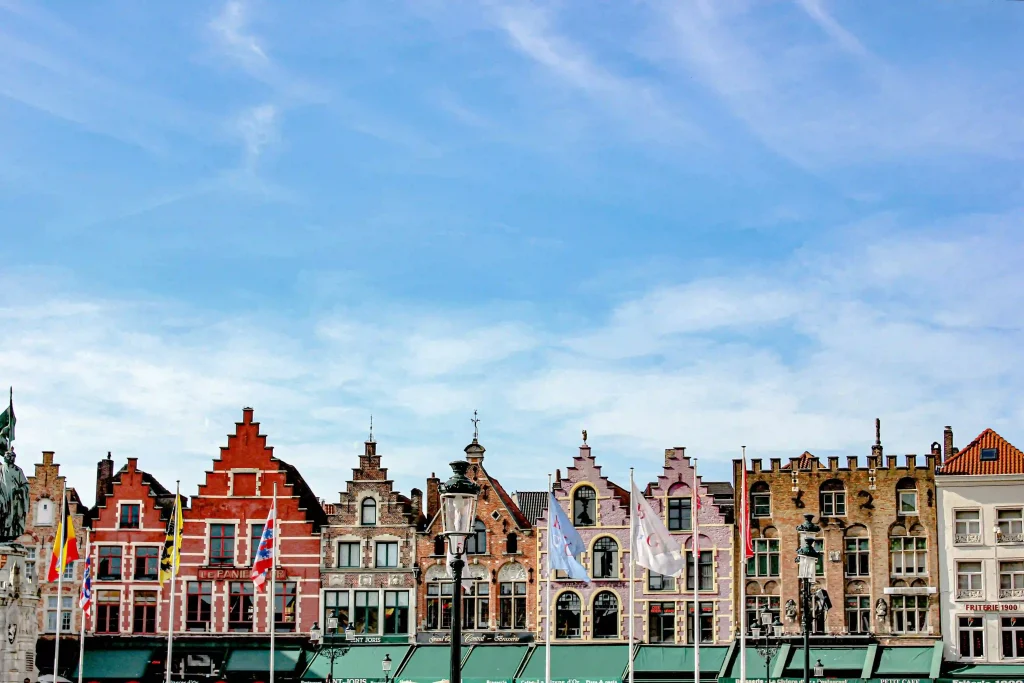
Bruges is where the trip should end. After the energy of Brussels and the lived-in feel of Ghent, it’s almost too much: quiet streets, canals reflecting medieval gables in every direction, the whole thing looking slightly unreal. People fall for it within about ten minutes.
Getting there from Ghent is nothing: direct trains, 25 to 30 minutes, all day. With luggage, or if changing hotels on public transport doesn’t appeal, a transfer to Bruges makes it effortless.
The single best piece of advice is also the simplest. Stay the night.
I once wheeled a suitcase across the cobbles before breakfast, which is as loud and awkward as it sounds. It was still worth it: at eight, Rozenhoedkaai had more delivery bikes than tour groups.
To see Bruges at its best:
- Be out by 8:00 am. Before the day-trippers roll in from Brussels and the cruise coaches from Zeebrugge, it’s a different city entirely.
- Climb the Belfry’s 366 steps. There’s no lift. There is, at the top, the best view in the city.
- Walk the canals, especially Rozenhoedkaai, the most photographed corner in Bruges. Early enough and you might have it nearly to yourself.
- Find the Begijnhof, whose walled courtyard is the calm counterweight to the crowds around the Markt.
Don’t over-plan the last afternoon. Sit at a café, put the map away, slow down. Bruges is remembered for how it feels more than for how many sights you counted.
Saving it for last means the trip builds instead of fizzling: Brussels introduces the country, Ghent gives it character, Bruges sends you home with the ending. Our guide to how to spend the day in Bruges has the full route, and Visit Bruges covers the practical details.
Where Should You Base Yourself in Belgium?
The biggest planning decision is where to sleep. It comes down to convenience versus atmosphere.
If I planned this again, I’d sleep in Brussels the first night and Bruges the second. Brussels without rushing, Ghent the next day, then Bruges while the streets are still empty. Those quiet early hours are the thing day-trippers never get, and for me they’re the whole difference between seeing Bruges and remembering it.
Getting Between the Cities
Part of why this itinerary works is that Belgian trains make it almost too easy. Direct services run all day, and you don’t need a car for any of it.
- Brussels → Ghent: about 30 minutes, direct.
- Ghent → Bruges: about 25 to 30 minutes.
- Brussels → Bruges: roughly an hour, direct.
Several an hour, and the Belgian Rail website has times, platforms and tickets. Check it for your date; evening services thin out.
The train isn’t always the answer, though. A private transfer between the cities makes more sense if you’re hauling big suitcases through stations, travelling with young kids and a pushchair, moving early or late when trains are scarce, or going straight to or from the airport rather than city to city.
One more thing if you’re tempted to hire a car: Belgium’s old centres aren’t built for them. Ghent has a formal Low Emission Zone inside the ring road, and Antwerp enforces one too. Bruges works differently, with car-free and low-traffic streets, limited central parking and restricted access at certain times. In all three, walking is simply easier.
What You Won’t See in 3 Days (and Why That’s Fine)
Three days are enough to enjoy Belgium. They’re not enough to see all of it, and that’s the point, not a failure.
By sticking to Brussels, Ghent and Bruges, you’re leaving a few things for next time:
- Antwerp: fashion, diamonds, and some of the country’s best museums.
- Wallonia and the Ardennes: Dinant, river valleys, medieval castles, a completely different Belgium.
- The coast: the beaches at De Haan, the promenade at Ostend.
Could you bolt one of these onto three days? Probably. Should you? No. Six cities in three days just puts you back on the trains you were trying to avoid. The whole idea here is fewer places, more time to sit in a café and see each city past its postcard.
Four or five days instead? Antwerp is the easiest add. Want scenery over another city? Dinant. Either way, it’s worth checking what a trip to Belgium costs before you commit to the extra night.
FAQ
Is 3 days enough for Belgium?
Enough for Brussels, Ghent and Bruges done properly, one full day each. Not enough for the whole country, but chasing that only makes the trip feel rushed.
Should I base myself in Brussels or move between cities?
Brussels is the easy single base, with quick trains both ways. But a night in Bruges buys you the early morning before the day-trippers arrive. Our pick is one night in Brussels, one in Bruges.
Can you see Brussels, Ghent and Bruges in 3 days?
Yes. They’re all within an hour of each other. A day each is comfortable and keeps the trip from turning into a race.
What is the best order for a Belgium itinerary?
Brussels, then Ghent, then Bruges. Brussels is the natural arrival point, Ghent an easy second day, and Bruges the strongest finish, especially with an overnight.
How do you get from Brussels Airport to start the trip?
Direct train to the centre in about 20 minutes if you’re light. A fixed-price transfer is easier with heavy luggage, with kids, or if you’d rather go straight to the hotel.
Ready to Explore Belgium?
Three days, three cities, and a lot less stress when the transport is sorted in advance. Arriving at the airport or moving between cities, a pre-booked transfer keeps the whole thing simple. Book your transfer and start enjoying Belgium from the moment you land.