
Top 7 Things to Do on a Day Trip to Bruges
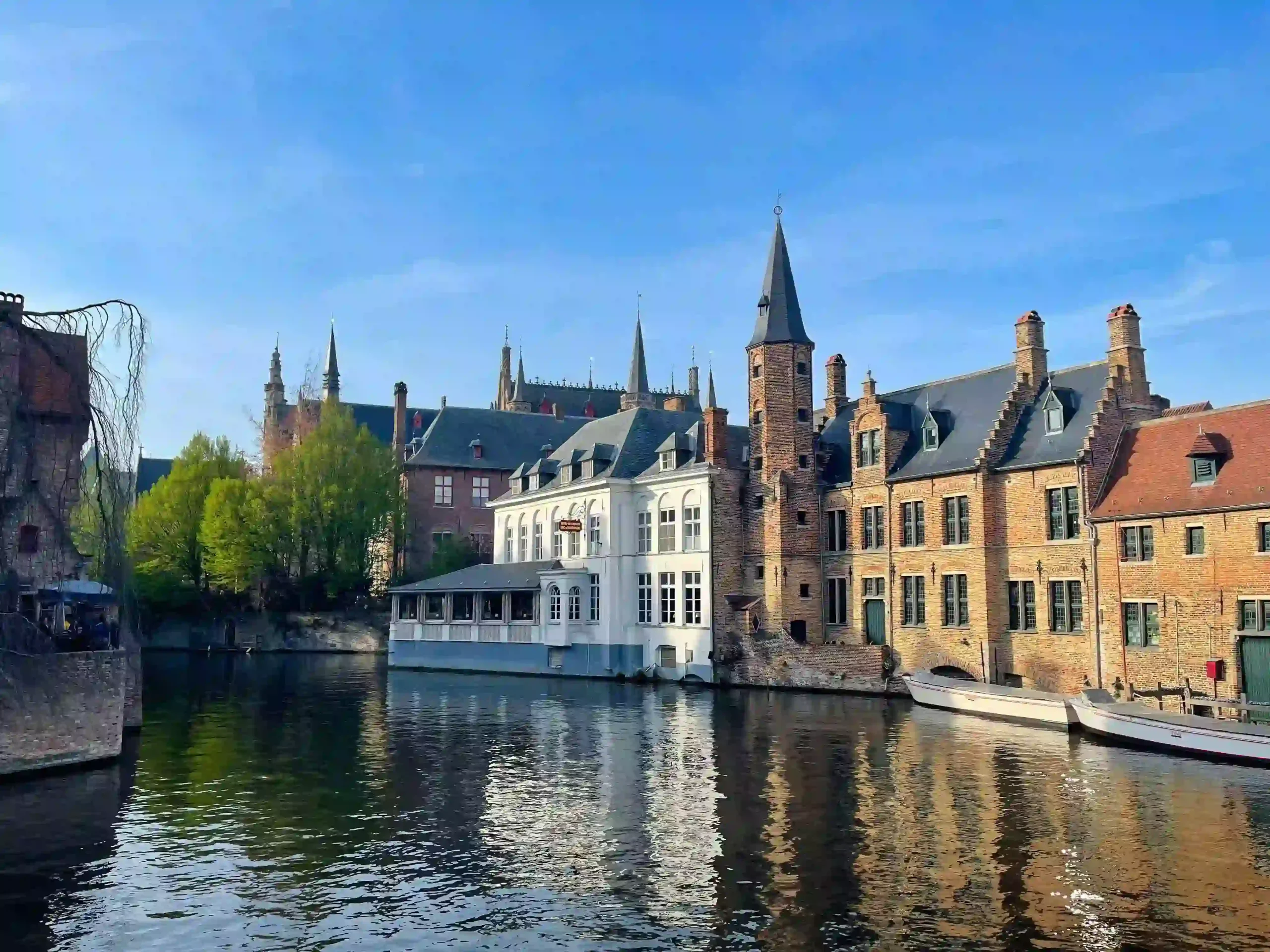
If you’re searching for the best things to do in Bruges, you’re probably picturing the same postcard scenes everyone falls in love with. Medieval towers reflected in quiet canals, cobbled lanes, white swans drifting across the water. Bruges really is one of the most beautiful cities in Belgium. It also happens to be one of the busiest. That’s both its greatest charm and its biggest challenge.
The good news is that you don’t need three days to enjoy it. One day is enough to experience the highlights, as long as you don’t try to see everything. Think of this guide as a menu rather than a checklist. Pick the places that match your interests, leave room for a slow walk beside the canals, and don’t feel guilty about skipping a museum or two.
The biggest secret to Bruges isn’t another hidden street. It’s timing. Visit the most famous spots early in the morning or later in the afternoon, and you’ll see a completely different city. The crowds thin out, the light becomes softer, and suddenly those postcard views feel like they’re yours for a moment.
Everything is wonderfully compact, too. The historic centre is easy to explore on foot, and Bruges is only about an hour from Brussels, making it one of the easiest and most rewarding day trips in Belgium.
Getting to Bruges
One of the best things about Bruges is how easy it is to reach. Direct InterCity trains run frequently from Brussels (about 1 hour), while Ghent is just 25-30 minutes away and Antwerp around 1.5 hours. Trains arrive at Bruges (Brugge) station, a 20-minute walk or a short bus ride from the historic centre. Timetables are available on the official Belgian rail website.
If you’re flying into Belgium, Brussels Airport is around 100 km away, while Charleroi Airport is farther south. For families or travellers with luggage, an airport transfer to Bruges is often the easiest option. You can also book a fixed-price transfer before you travel.
Bruges is also just 25 minutes from the Port of Zeebrugge, making it a popular stop for cruise passengers. If you’re arriving this way, our guide to arriving in Belgium by ferry explains your options. If you’re driving, keep in mind that the medieval centre has restricted traffic, so using a park-and-ride is usually the easiest choice.
Tip: Planning to visit several museums? Keep reading before buying individual tickets. The Musea Brugge Card can save you money if you visit three or more Bruges attractions in a day.
1. Climb the Belfry for Bruges’ Iconic View
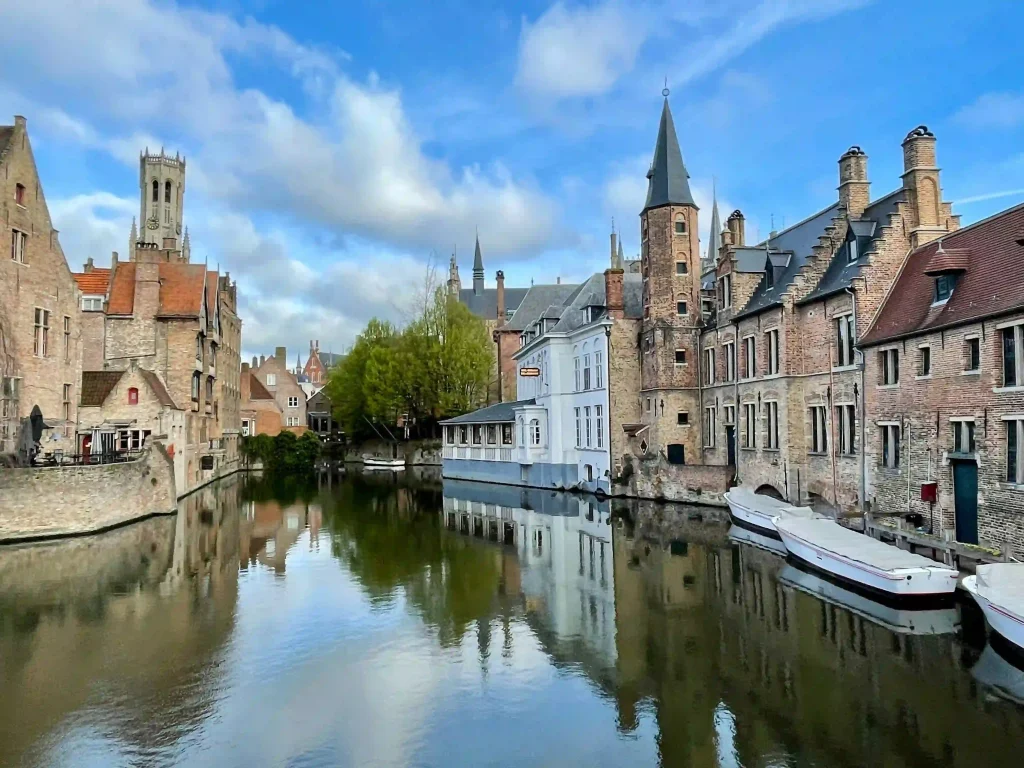
There are plenty of beautiful churches and towers in Belgium, but the Belfry of Bruges is the one that stays with you. Rising 83 metres above the Markt since the 13th century, it has become the city’s defining landmark. If you’ve seen the film In Bruges (2008), you’ll recognise it instantly. If you haven’t, you’ll probably leave wondering why you waited so long to climb it.
Quick facts:
- Height: 83 metres
- Steps: 366 (there is no lift)
- Carillon: 47 bells, ringing every 15 minutes
- Opening hours: 9:30 am to 6:00 pm
- Last admission: 1 hour before closing
- Adult ticket: around €15 (2026)
The climb leads through centuries of history, past the historic treasury and up a narrow medieval staircase. Because only a limited number of visitors are allowed at the top, entry is often managed with timed slots. The reward is one of the best views in Belgium, with red rooftops, church spires and canals stretching across Bruges.
- Tip: Wear comfortable shoes and save the climb until before lunch. Those 366 steps are steep, there’s no lift, and you’ll enjoy them much more with fresh legs than after a plate of Flemish stew.
- Tip: Reserve your ticket online if you’re visiting during spring or summer. The queue inside the narrow staircase can become surprisingly long around the middle of the day.
- Tip: Arrive for the first entry at 9:30 am. You’ll avoid the biggest crowds, climb in cooler temperatures, and the soft morning light makes the view over Bruges even more impressive.
Somewhere around step 250 you’ll probably question your decision. By the time you reach the top, you’ll have forgotten your legs completely.
For the latest opening hours, ticket information and online reservations, check the official Belfry visitor page.
2. Soak Up the Markt and Burg Squares
If the Belfry is Bruges’ most famous landmark, the Markt is where the city comes alive. This UNESCO-listed square has been the city’s heart for centuries, lined with colourful guild houses, café terraces and the Provincial Court, with the Belfry watching from the southern side. On Saturday mornings, from 8:00 am to 1:00 pm, it also hosts a lively local market.
Just a minute away, Burg Square feels quieter and more elegant. Here you’ll find the Gothic City Hall, built between 1376 and 1421, alongside the Basilica of the Holy Blood. Many visitors rush back to the Markt, but Burg is worth lingering in, especially if you want a short break from the crowds.
- Tip: Arrive before 9:00 am for quieter photos of the Markt and Belfry.
- Tip: Horse-drawn carriages cost around €60 for 30 minutes. Classic, yes, but Bruges is easier and cheaper to enjoy on foot.
- Tip: Restaurants on the Markt are often pricier. Walk one or two streets away for better value.
- Tip: Don’t skip Burg Square. It’s close, beautiful and usually less crowded.
Before your visit, you can find maps, event information and practical visitor advice on the Visit Bruges official tourism website.
3. Step Into the Basilica of the Holy Blood
From the outside, the Basilica of the Holy Blood is easy to overlook among the grand buildings of Burg Square. That would be a mistake. Built in the 12th century, it’s one of Bruges’ most fascinating landmarks because it combines two very different churches under one roof.
The lower chapel is Romanesque, simple and peaceful, while the richly decorated Gothic and Neo-Gothic upper chapel houses the basilica’s most famous treasure: a vial believed to contain the Holy Blood of Christ, brought back from the Crusades by Count Thierry of Alsace. The relic is usually displayed between 12:00 pm and 4:00 pm, although it’s worth checking the schedule before your visit.
Entry to the basilica is free, while the treasury museum costs around €2.50 and displays the magnificent Holy Blood Reliquary from 1614.
- Tip: If you want to see the Holy Blood relic, check the viewing times in advance. Outside the usual hours, you can visit the chapel but not the relic.
- Tip: Even if you’re not religious, don’t skip the basilica. The Romanesque lower chapel alone makes it worth a visit.
- Tip: Photography isn’t allowed in the upper chapel. Put your phone away for a few minutes and enjoy the peaceful atmosphere of this active place of worship.
For current visiting hours and information about the relic and treasury, visit the official Basilica of the Holy Blood website.
4. Cruise the Canals (and Find Rozenhoedkaai)
There’s a reason Bruges is known as the Venice of the North. The canals are the heart of the city, offering views you simply can’t get from the streets. Most boat tours last around 30 minutes and depart from several jetties, including the one near Rozenhoedkaai. The boats are small, so they often fill up quickly during the busiest months.
Even if you skip the cruise, don’t miss Rozenhoedkaai (Quay of the Rosary). This is Bruges’ most photographed viewpoint, where the Dijver and Groenerei canals meet with the Belfry rising above the rooftops. Chances are you’ve already seen this exact view on a postcard.
- Tip: Visit Rozenhoedkaai early in the morning for the best light. Later in the day, the buildings are mostly in shadow.
- Tip: Take your canal cruise early or after 5:00 pm. Around lunchtime, queues are longer and the boats are usually full.
- Tip: Even without a boat ride, spend a few minutes at Rozenhoedkaai. It’s one of those places that really is as beautiful as everyone says.
You’ll probably take half of your Bruges photos here. The other half will accidentally include everyone else doing the same thing.
Before planning your cruise, you can check seasonal information and departure details on the official Visit Bruges information website.
5. Eat Your Way Through Bruges: Chocolate, Waffles, Fries
You could spend an entire day in Bruges eating and still leave with a list of places to come back to. Between artisan chocolatiers, fresh waffles, crispy Belgian fries and local beer, the city takes its food just as seriously as its medieval architecture. The trick is knowing where to stop, because not every chocolate shop is created equal.
Don’t leave Bruges without trying:
- Handmade Belgian chocolates from artisan chocolatiers like The Chocolate Line, Dumon, Depla or Sukerbuyc.
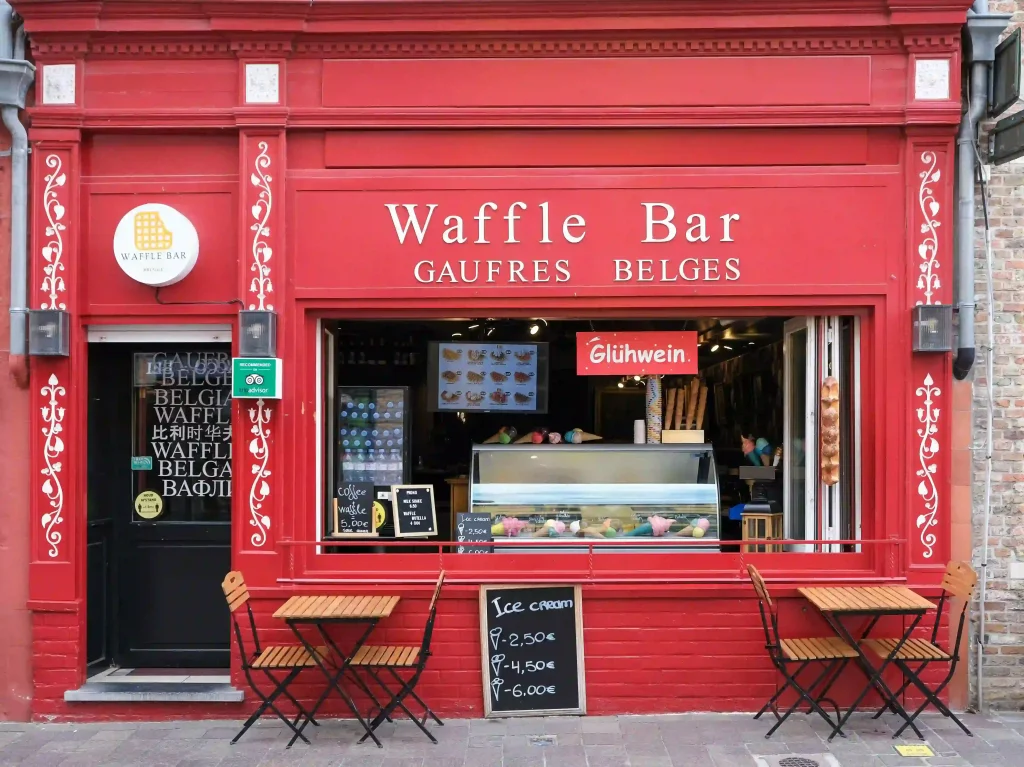
- Fresh Belgian waffles, preferably made to order rather than sitting in a display window.
- Twice-fried Belgian fries, served with sauces like Andalouse or samurai instead of plain ketchup.
- Brugse Zot, the city’s signature beer, is brewed at the historic De Halve Maan brewery. Expect to pay around €5–7 for a glass.
Bruges has more than 50 chocolate shops, but not all are worth your time. Many around the Markt are aimed at tourists, while artisan chocolatiers like Dumon and The Chocolate Line are where locals buy fresh pralines. Beer lovers should also visit De Halve Maan, the only brewery still operating in Bruges’ historic centre, where guided tours end with a glass of the famous Brugse Zot.
- Tip: Buy your chocolates from artisan shops like Dumon or The Chocolate Line rather than the tourist stores around the Markt.
- Tip: Most good chocolatiers offer free samples, so taste before choosing a box to take home.
- Tip: Order your fries with a traditional Belgian sauce like andalouse or samurai instead of plain ketchup.
- Tip: Planning to visit De Halve Maan? Book the brewery tour in advance, especially during the busy season.
Hungry yet? That’s the effect Bruges tends to have. For brewery tours, opening hours and tasting information, visit the official De Halve Maan website.
6. Find Calm at Begijnhof and Minnewater
After the busy streets around the Markt, this is where Bruges finally slows down. Just a short walk from the historic centre, the Begijnhof (Beguinage) and Minnewater offer a quieter side of the city, where the crowds fade away and the pace becomes much gentler.
The Begijnhof, a UNESCO World Heritage Site dating back to the 13th century, was once home to the Beguines and is now inhabited by Benedictine nuns. Its whitewashed houses surround a peaceful courtyard that’s free to visit, while the church costs around €2.
Next door is Minnewater, or the Lake of Love, where swans glide across the water and tree-lined paths make it one of the most relaxing spots in Bruges. Best of all, the lake and surrounding park are completely free to enjoy.
Why it’s worth coming here:
- Begijnhof: UNESCO-listed courtyard with beautifully preserved white houses.
- Minnewater: A peaceful lakeside park that’s perfect for a slower stroll.
- Cost: Free to explore both areas, with the Begijnhof church costing around €2.
- Atmosphere: One of the quietest and most relaxing corners of Bruges.
Neither Begijnhof nor Minnewater is about ticking off another attraction. They’re places to slow down. Find a bench, watch the swans drift across the lake, and enjoy a few peaceful minutes before returning to the busier streets of Bruges.
- Tip: If the crowds around the Markt become overwhelming, spend half an hour here. It feels like a completely different side of Bruges.
- Tip: Keep your voice down in the Begijnhof. It’s still an active religious community, and visitors are expected to respect the peaceful atmosphere.
- Tip: Visit in spring if you can. The courtyard fills with blooming daffodils and becomes one of the city’s prettiest spots.
- Tip: Visit Minnewater and the Begijnhof together. They make for one of the most relaxing and completely free parts of a day in Bruges.
For seasonal opening information and visitor guidance, see the official Visit Bruges guide.
7. See Flemish Masters at the Groeningemuseum
If you’ve spent the day admiring Bruges’ medieval streets, the Groeningemuseum helps explain why this small city became one of Europe’s great cultural centres. It’s the most important art museum in Bruges and home to an outstanding collection of Flemish Primitives, including masterpieces by Jan van Eyck, Hans Memling and Hieronymus Bosch. The museum isn’t huge, but that’s part of its appeal. You can enjoy world-class paintings without feeling overwhelmed or spending an entire afternoon indoors.
At a glance:
- Highlights: Jan van Eyck, Hans Memling, Hieronymus Bosch and other Flemish Masters
- Admission: Around €15
- Included in: Musea Brugge Card
- Closed: Mondays (like many museums in Bruges)
Rather than trying to tell the whole story of European art, the Groeningemuseum focuses on what Bruges does best. The galleries trace the evolution of Flemish painting over several centuries, making it easy to appreciate both the incredible detail of the early masters and the artistic changes that followed. Even visitors who don’t usually spend much time in museums often find themselves lingering longer than expected.
- Tip: Don’t plan your museum day for a Monday. The Groeningemuseum, along with many other museums in Bruges, is closed.
- Tip: Allow about one to one and a half hours for your visit. The museum is compact, thoughtfully arranged and easy to explore without museum fatigue.
- Tip: If you’re planning to visit three or more museums during your day in Bruges, the Musea Brugge Card usually pays for itself. We’ll take a closer look at that next.
For exhibitions, opening hours and ticket information, visit the official Musea Brugge website.
Save Money with the Musea Brugge Card
If you’re planning to visit more than one museum, don’t buy your tickets one by one just yet. The Musea Brugge Card includes entry to 11 attractions, including the Belfry, the Groeningemuseum, City Hall, and several other museums across the city.
The value becomes clear very quickly. A ticket to the Belfry costs around €15, while the Groeningemuseum is another €15. Add just one more museum to your itinerary, and you’ve already spent roughly what the card costs. If you visit three or four attractions, the card usually pays for itself.
It’s not for everyone. If you’re planning a relaxed day of canals, chocolate shops and cafés, individual tickets are probably enough. But if museums are high on your list, the Musea Brugge Card is an easy way to save money while seeing more.
Beat the Crowds: When to Visit Bruges
Here’s something many travel guides don’t tell you: the biggest challenge in Bruges isn’t deciding what to see. It’s sharing it with everyone else. The city attracts thousands of day-trippers from Brussels every day, and when cruise ships dock in nearby Zeebrugge, the historic centre becomes even busier. Between late morning and the middle of the afternoon, places like the Markt, the Belfry and Rozenhoedkaai can feel surprisingly crowded.
Fortunately, the solution is simple. Visit the Markt, Rozenhoedkaai and the Belfry before 9:30 am, or come back after 5:00 pm, when most organised tours and cruise groups have already left. The difference is remarkable. You’ll spend less time weaving through crowds and more time appreciating the city itself.
If you can, stay into the evening. As the day-trippers leave, the canals glow under the lights, the Belfry bells echo through the city, and Bruges becomes wonderfully peaceful. It’s the time when many travellers fall in love with the city.
Which Bruges Experience Is Right for You?
The best thing about the city is that you don’t have to do everything in one day in Bruges. The historic centre is wonderfully compact, so it’s easy to mix and match the places that interest you most. If you’re short on time, focus on the things to do in Bruges that match your interests.
- For history and classic views: Climb the Belfry, stroll around the Markt, and continue to Burg Square to experience the city’s medieval heart.
- For art and culture: Combine the Groeningemuseum with the Basilica of the Holy Blood for a deeper look at Bruges’ artistic and religious heritage.
- For peace and nature: Slow down at the Begijnhof before taking a relaxing walk around Minnewater (Lake of Love).
- For food lovers: Spend your time tasting handmade chocolates, enjoy authentic Belgian fries, and finish with a Brugse Zot at De Halve Maan.
Whatever you choose, leave a little space in your schedule for an unplanned canal walk and one good Belgian waffle. In Bruges, those unhurried moments often become the highlight of the entire day.
Getting to Bruges Without the Stress
Bruges is easy to explore once you’re there. The part worth planning is the journey, especially if you’re arriving at Brussels Airport, Charleroi Airport, or Zeebrugge.
With luggage, children, or limited time, an airport transfer to Bruges can be simpler than changing trains after a flight or cruise. If you’re coming from the UK first, this guide on how to reach Belgium from London can help you compare routes.
You can also book your airport transfer to Bruges in advance and start the day calmly, without turning transport into the hardest part of the trip.
FAQ
1. How far is Bruges from Brussels?
Bruges is about 100 kilometres from Brussels. Direct InterCity trains run frequently and take around one hour. By car, the journey usually takes 1 to 1.5 hours, depending on traffic. Since the historic centre has restricted vehicle access, it’s often easiest to use one of the city’s park-and-ride facilities.
2. Is Bruges worth visiting?
Absolutely. With so many things to do in Bruges, it’s one of the best day trips in Belgium. To experience the city at its best, arrive early in the morning or stay until the evening, when the largest crowds have disappeared.
3. How many days do you need in Bruges?
One day is enough to see the main highlights, including the Belfry, the Markt, a canal cruise and a few great places to eat. If you have more time, spending one night in Bruges lets you enjoy the city’s peaceful atmosphere after most day visitors have left.
4. How do I get from Brussels Airport to Bruges?
You can travel by train via Brussels, with the journey taking around 1.5 hours including the transfer. If you’re travelling with luggage or prefer a more direct option, a fixed-price airport transfer will take you straight from Brussels Airport to your accommodation in Bruges.
Planning a Bruges Day Trip?
If you’re flying into Belgium or arriving via Zeebrugge, planning your journey in advance makes the whole trip much easier. Book your airport transfer to Bruges and start exploring the city relaxed, without worrying about connections or luggage.