
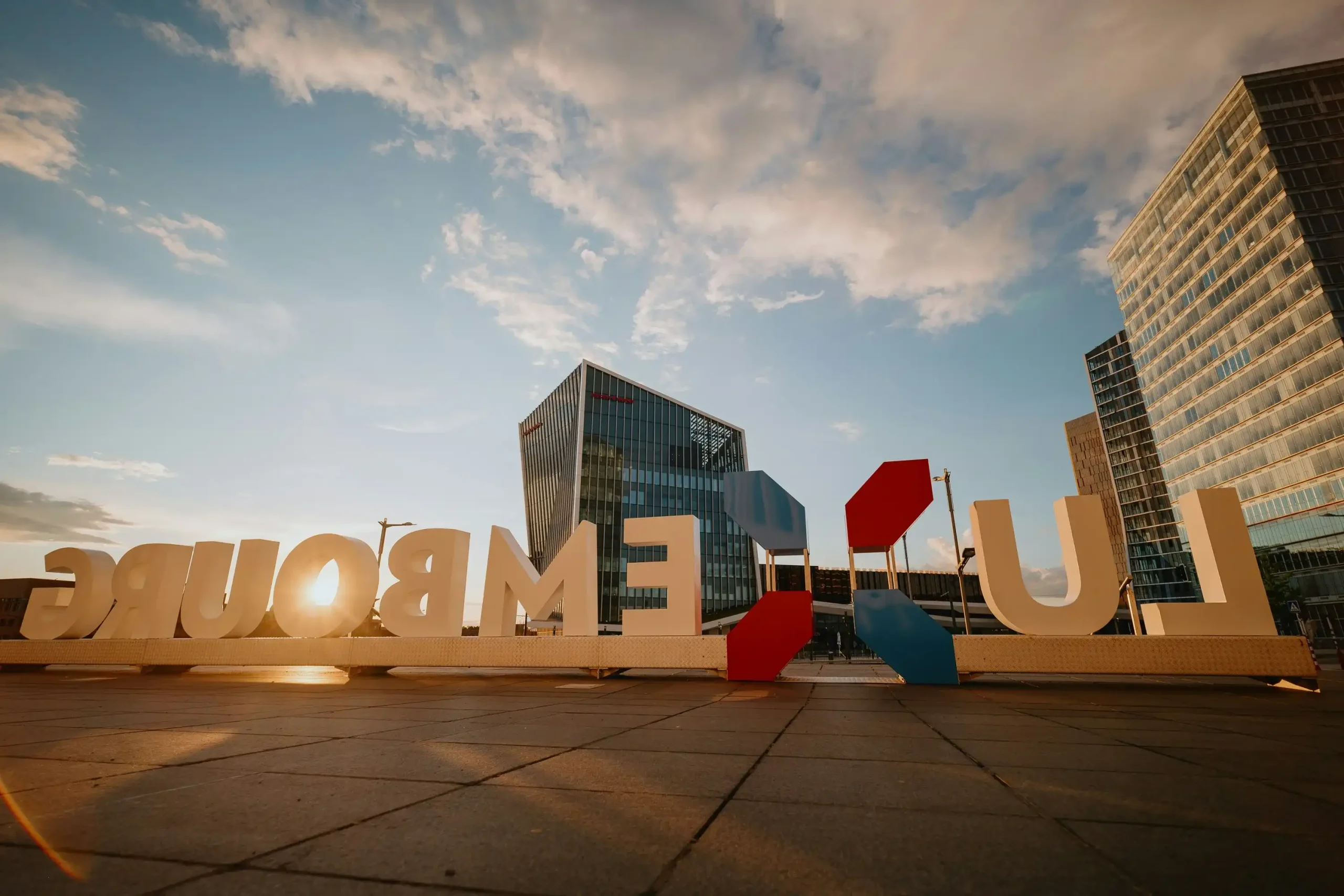
7 Things to Do in Luxembourg on a Day Trip from Belgium
If you’re searching for the best things to do in Luxembourg, you’re probably asking yourself the same question I did: is it really worth going there for just one day? Every time I mentioned Luxembourg, the reaction was almost always the same: “Why there?” Luxembourg? Really? It’s one of those countries everyone has heard of, but surprisingly few people actually visit.
I went anyway, expecting a quiet capital where I’d tick off a few sights and head home early. Instead, I found a city built on cliffs, centuries-old fortifications, neighbourhoods that felt completely different from one another, and views that made me stop far more often than I’d planned. The best part? Luxembourg City is compact enough that you can experience its highlights in a single day. Think of this guide as a menu, not a checklist.
One thing surprised me before I even arrived. Getting around Luxembourg itself couldn’t be easier because public transport is free. Getting there from Belgium, however, takes a bit more planning. That’s the part I’ll help you with too.
Good to Know: Transport in Luxembourg Is Free
Since 1 March 2020, all public transport in Luxembourg, including buses, trams and second-class trains, has been free for everyone, residents and tourists alike. You don’t need to buy a ticket to travel within the country. The Mobiliteit.lu app is the easiest way to check routes and timetables.
There is one important exception. Free transport only applies inside Luxembourg. Your journey from Belgium to Luxembourg is not free, and choosing the right way to get there can make a big difference. We’ll look at all the options next.
Getting to Luxembourg from Belgium
One thing I underestimated was the journey itself. Luxembourg looks close on the map, but a day trip from Belgium takes a little planning if you want to make the most of it. If you’re still figuring out how to reach Belgium from London, it’s worth planning this part of your itinerary at the same time. I quickly realised that leaving late simply wasn’t an option. Six hours of travel in one day adds up faster than you think.
The train is the option most people choose. Direct and connecting InterCity services run from Brussels to Luxembourg in around 3 hours, while the fastest direct journey takes about 3 hours 16 minutes. Some services require a change in Arlon or Namur. There are roughly 34 trains a day, departing every 17 minutes, with one-way fares usually starting from €13 to €18. You’ll arrive at Luxembourg Gare Centrale, about a 20-minute walk from the Old Town. Timetables are easy to check on the Belgian Rail website and the CFL website.
Driving is quicker, usually 2 to 3 hours for roughly 190 kilometres, and gives you the freedom to explore beyond the capital. Luxembourg City also provides an online parking availability system, which is useful before you arrive.
If you’d rather not organise anything yourself, organised day tours from Brussels often include a stop in Dinant, a guide and free time in Luxembourg City. They cost more, but everything is taken care of.
Arriving at Brussels Airport (Zaventem) or Charleroi Airport? This is where a transfer to Luxembourg starts to make sense, especially if you’re travelling with luggage, children or a small group. A fixed-price transfer also avoids juggling train connections after a flight.
One thing I kept seeing on travel forums was complaints about railway engineering works. Most journeys are straightforward, but occasional diversions or replacement services do happen, and some travellers have found themselves changing trains more than expected. That’s another reason I’d recommend catching an early departure.
| Travel option | One-way time | Typical cost | Main advantage | Best for |
|---|---|---|---|---|
| Train | ~3 hours | €13-18 | Affordable, no traffic | Solo travellers, budget trips |
| Car | 2-3 hours | Fuel + parking | Flexibility, explore more | Families, road trips |
| Organised tour | ~3 hours | €€ | Guide included, hassle-free | First-time visitors |
| Transfer | 2-3 hours | Fixed price | Door-to-door, luggage-friendly | Groups, airport arrivals |
Tip: If you’re travelling by train, aim to leave Brussels before 8:00 a.m. Three hours there and three hours back disappear quickly, and an early start gives you enough time to enjoy the city instead of watching the clock.
1. Go Underground at the Bock Casemates
If there’s one place that completely changed my first impression of Luxembourg, it was the Bock Casemates. I’ll be honest, I almost walked past the entrance thinking, “They’re just tunnels.” That turned out to be one of the worst assumptions I made all day.
The Bock Casemates are the city’s most famous landmark, a vast underground fortress carved into the rock during the 17th and 18th centuries. At their peak, the tunnels stretched for around 23 kilometres, helping earn Luxembourg the nickname “Gibraltar of the North.” The story actually began much earlier, in 963, when Count Siegfried built his castle on this rocky outcrop. Since 1994, the fortifications have formed part of Luxembourg City’s UNESCO World Heritage Site.
Inside, the atmosphere changes almost immediately. It’s a little eerie, a little cramped, and surprisingly quiet. The route is only about 110 metres long across three levels, but it feels like you’re wandering much deeper underground. In some sections, the ceiling drops to around 1.8 metres, so taller visitors will probably find themselves ducking more than once. Then you reach one of the old gun openings, look out across the Alzette valley, and suddenly understand why this place mattered so much.
Quick Facts
- Adult ticket: €8
- Children (4-17): €4
- Open: 1 March to 2 November (opening hours vary by month)
I’d recommend visiting early in the morning, especially on weekdays in May, June or September, when it’s much quieter. Wear comfortable shoes, and don’t rely too much on the information boards because they’re fairly brief. Reading a little history beforehand or joining a guided tour makes the experience much richer. You can check seasonal opening hours on the official Bock Casemates page.
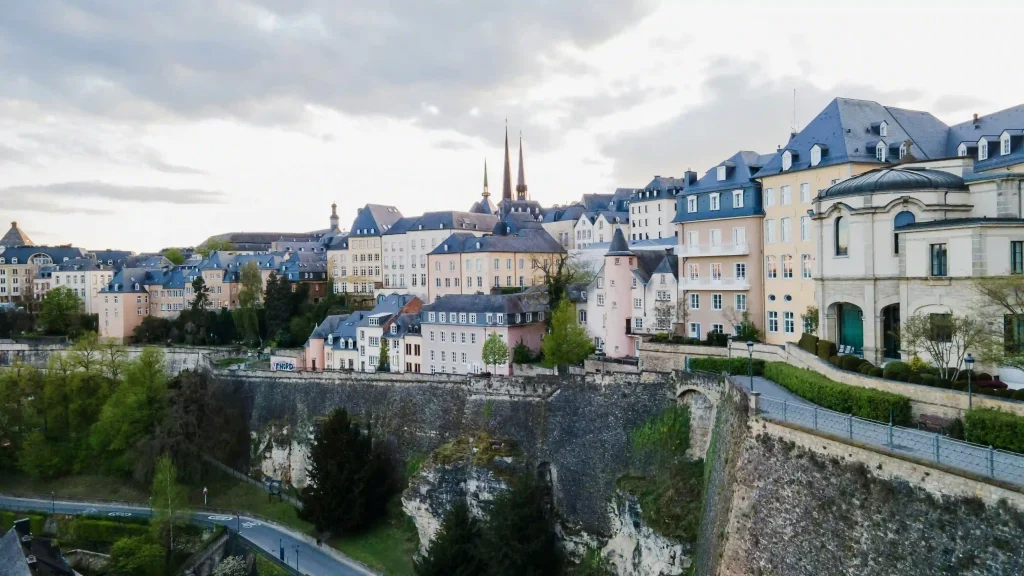
2. Walk Europe’s Most Beautiful Balcony (Chemin de la Corniche)
The Chemin de la Corniche has a nickname that made me roll my eyes at first: “Europe’s Most Beautiful Balcony.” It sounded like the kind of marketing slogan every city invents. Then I walked out of the casemates, looked over the Alzette valley and thought… alright, fair enough.
The promenade follows the 17th-century city ramparts, with uninterrupted views over the Grund, the river below and the dramatic cliffs that make Luxembourg City feel much larger than it actually is. It’s one of those places where you naturally slow down. I kept telling myself I’d only stop for one photo, then ended up standing there for several minutes just watching the light change across the valley.
The best part is that it costs nothing and is only a short walk from the Bock Casemates, so the two attractions fit together perfectly. If you can, come back around sunset. The warm light on the old stone walls and rooftops completely changes the atmosphere.
If you’re only passing through Luxembourg for a day, this is one viewpoint I wouldn’t skip. For walking routes and visitor information, the official Luxembourg City tourism website has useful maps and updates.
3. Get Lost in the Grund
I almost skipped the Grund. After climbing through the casemates and walking along the Corniche, my legs were starting to complain, and staying in the Old Town seemed like the easier option. That would have been the biggest mistake of the day.
At the bottom of the Alzette Valley, the Grund feels like a different city. The streets are quieter, the pace slows down, and the rows of 17th and 18th-century pastel houses reflect in the river. It’s hard to believe you’re only a few minutes below the busy squares above. The historic Neumünster Abbey, now a cultural centre, adds even more character to the neighbourhood.
Getting down is part of the experience. You can take the free panoramic Pfaffenthal lift, walk down the steep staircases, or simply follow the winding streets. I chose the stairs on the way down and immediately decided the lift sounded like an excellent idea for next time.
By early evening, the Grund becomes even more special. As the cliffs and old city walls begin to light up above the valley, the whole neighbourhood takes on a calm, almost unreal atmosphere. It was probably the moment that stayed with me the longest after the trip.
If you’re visiting around lunchtime, find a brasserie with a terrace by the river instead of eating in the main squares. It feels more relaxed, and the setting is hard to beat. You can find walking routes and more visitor information on the official Visit Luxembourg page for the Grund.
4. See the Grand Ducal Palace and Place d’Armes
The Grand Ducal Palace isn’t the biggest royal residence you’ll ever see. Actually, that’s exactly what I liked about it. Luxembourg is such a small country that even the changing of the guard feels a little more personal than ceremonial. There’s no huge crowd or grand spectacle. Just enough tradition to make you stop and watch for a few minutes.
Built in the Flemish Renaissance style, the palace is the official residence of the Grand Duke of Luxembourg. For most of the year, you’ll only see the impressive façade, as the interior opens to visitors during the summer months through guided tours.
If you’re visiting in summer:
- Book palace tickets in advance, as tours often sell out.
- Take a few minutes to watch the changing of the guard.
- Walk two minutes to Place d’Armes afterwards.
That’s where the city feels most alive. Lined with cafés and restaurant terraces, Place d’Armes is where locals and visitors naturally slow down. In summer, the square often hosts open-air concerts, while the rest of the year it’s simply a great place to sit with a coffee and watch everyday life unfold. I spent far longer there than I’d planned, partly because I needed a break, and partly because it was one of those places where nothing much happens, yet you don’t really want to leave.
For tour dates and visitor information, check the official Grand Ducal Palace visitor page.
5. Step Into Notre-Dame Cathedral
After the open viewpoints, busy squares and constant walking, Notre-Dame Cathedral felt like hitting a pause button. I’m not particularly someone who visits every church while travelling, but this was one of those places where I ended up sitting quietly for ten minutes without really planning to.
Built in the 17th century in a Gothic style and expanded over the years, the cathedral combines elegant architecture with a peaceful atmosphere. Beneath it lies the crypt of the Grand Ducal family, adding another layer of history to one of Luxembourg’s most important religious buildings.
The contrast is what stayed with me most. Outside, the city was full of people moving between cafés and viewpoints. Inside, the noise disappeared almost instantly. Even if you’re not interested in religious history, it’s worth stepping in simply to enjoy a few quiet moments before continuing your walk.
The cathedral is usually free to enter, making it an easy stop as you explore the city centre. Just remember to dress respectfully, as it’s still an active place of worship.
If you’d like to check visitor information or learn more about its history before your visit, you’ll find everything on the official Luxembourg City tourism website.
6. Cross the Adolphe Bridge and Explore Pétrusse Park
One thing that genuinely surprised me about Luxembourg City was how green it is. I expected fortifications, old streets and viewpoints. I didn’t expect a peaceful valley running right through the middle of the capital.
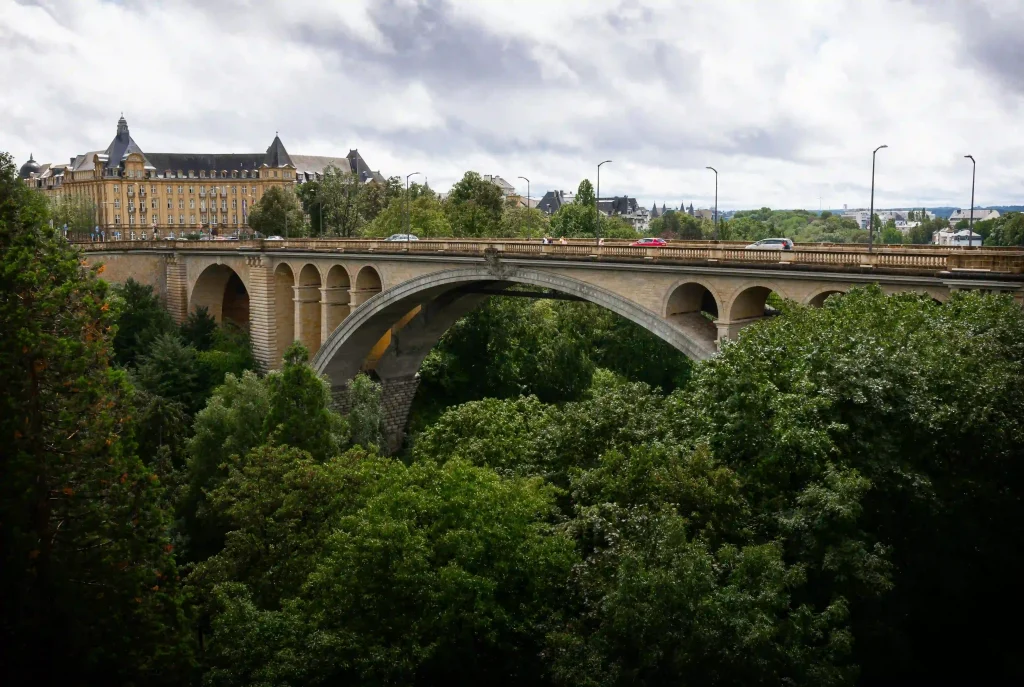
The Adolphe Bridge is one of Luxembourg’s best-known landmarks, a magnificent stone arch spanning the Pétrusse Valley. Most people stop for a quick photo and move on. I’d suggest staying a little longer. The views stretch across the valley, and it’s one of the best places to appreciate how dramatically the city is built above the landscape.
Then do what many visitors don’t. Head down into Pétrusse Park.
Don’t miss:
- The panoramic views from the bridge, completely free of charge.
- A walk through the green valley below, just minutes from the busy city centre.
- A quiet bench or patch of grass if you need a break before continuing your sightseeing.
Dropping into the park feels like leaving the city behind without actually leaving it. Within two minutes, the traffic fades away and you’re surrounded by trees, walking paths and open green spaces. After a full morning of climbing stairs and exploring historic streets, it was exactly the reset I needed.
For walking routes and visitor information, visit the official Visit Luxembourg website.
7. Save with the Luxembourg Card (and Eat Well)
By this point, I was starting to wonder whether the Luxembourg Card would have saved me any money. For me, the answer was “not really,” but it depends on how you travel.
The card gives you access to more than 90 attractions across the country and is available for 1, 2 or 3 days. If you’re planning to visit several paid attractions or museums, it can easily pay for itself. Just don’t buy it because you think it includes transport. Public transport in Luxembourg is already free, so the calculation is really about museum and attraction tickets.
I also learned another lesson the slightly expensive way. I paid €6 for a coffee in one of the main tourist squares, and I’m still mildly annoyed about it. Luckily, lunch in the Grund was far better value.
My recommendations:
- Buy the Luxembourg Card if you’re visiting at least three paid attractions.
- Head to Grund or Clausen for lunch instead of eating in the busiest squares.
- Try Judd mat Gaardebounen, Luxembourg’s traditional smoked pork with broad beans.
- If you enjoy sparkling wine, order a glass of Crémant de la Moselle. It’s one of the country’s specialties and well worth trying.
If you’re comparing prices or included attractions, the official Luxembourg Card website has the latest information.
A Perfect Day in Luxembourg
If you only have one day in Luxembourg, this itinerary gives you enough time to see the city’s highlights without feeling rushed.
- Morning: Arrive early and visit the Bock Casemates before the crowds.
- Late morning: Walk along the Chemin de la Corniche, then head down into the Grund.
- Lunch: Relax at a riverside brasserie in the Grund.
- Afternoon: Visit the Grand Ducal Palace, Place d’Armes and Notre-Dame Cathedral.
- Late afternoon: Walk across the Adolphe Bridge and unwind in Pétrusse Park.
- Evening: Finish with a coffee or a glass of Crémant, then catch an early evening train back to Belgium. Just don’t miss the last departures, usually around 20:11.
Is Luxembourg Worth a Day Trip?
I’d say yes, but with one important condition: you need to be comfortable with the journey. Spending around three hours each way on a train is a long day, and that’s the biggest downside of visiting Luxembourg from Belgium. An early start isn’t optional if you want enough time to enjoy the city.
That said, Luxembourg City surprised me. For me, the mix of history, viewpoints and relaxed streets makes it one of the best places for anyone looking for memorable things to do in Luxembourg. It’s compact, easy to explore on foot, and you really can see the main highlights in a single day without feeling rushed.
If long travel days aren’t your thing, I’d recommend staying overnight instead. But if you’re happy to leave early and make a full day of it, Luxembourg is one of the most rewarding day trips you can take from Belgium.
Getting There Without the Stress
Once you’re in the city, a Luxembourg day trip feels surprisingly relaxed. Most attractions are within walking distance, and public transport is free if you need it. The harder part is the journey from Belgium.
Three hours on the train, possible connections and occasional engineering works can turn what should be an easy day trip into a long travel day, especially if you’re carrying luggage or arriving straight from the airport.
If you’re landing at Brussels Airport (Zaventem) or Charleroi Airport, booking a transfer to Luxembourg is one way to keep the journey simple. You travel directly to your destination without worrying about train changes, timetables or replacement buses, which is particularly convenient for families, small groups and travellers with heavy bags.
Not sure which airport you’ll be arriving at? Our guide explains which Belgian airport you land at and what to expect from each one before continuing your journey.
If you’d rather organise everything before you travel, you can book your transfer to Luxembourg in advance and start your day knowing the hardest part of the journey is already taken care of.
FAQ
1. How do you get from Brussels to Luxembourg?
The easiest options are train, car, organised tour or direct transfer. The Brussels to Luxembourg train takes around 3 hours, with fares usually starting from €13-18 one way and roughly 34 trains per day. Driving takes about 2 to 3 hours. For a day trip, leave early.
2. Is public transport in Luxembourg really free?
Yes. Since 2020, public transport in Luxembourg has been free for everyone, including tourists. This includes buses, trams and second-class trains inside Luxembourg. Your journey from Belgium to Luxembourg is not included.
3. Is Luxembourg worth visiting for a day?
Yes, especially if you enjoy compact historic cities, old fortifications, scenic viewpoints and quiet neighbourhoods like the Grund. The main downside is the journey, which takes around 3 hours each way by train from Brussels.
4. How far is Luxembourg from Brussels?
Luxembourg City is about 190 kilometres from Brussels. By train, the journey takes around 3 hours. By car or transfer, it usually takes 2 to 3 hours, depending on traffic.
5. What is there to do in Luxembourg City?
If you’re wondering about the best things to do in Luxembourg City, start with the Bock Casemates, Chemin de la Corniche, the Grund, the Grand Ducal Palace, Notre-Dame Cathedral, Adolphe Bridge and Pétrusse Park.
Ready to Explore Luxembourg?
Luxembourg is well worth the trip, especially when the journey is as straightforward as the day itself. If you’d rather skip train connections and travel directly, you can book your transfer to Luxembourg before you set off.