
Bruges or Ghent: Which City Fits Your Trip Best?
Bruges or Ghent. Thirty minutes apart by train, both with canals, both medieval, both able to fill a day without trying. Which is exactly why the choice is so annoying.
I’ve spent time in both. I’ll admit my bias up front: Ghent is the one I’d go back to first. That doesn’t make it the right answer for you, and I’ll explain why.
The Short Answer
Thirty seconds, if you don’t want the full comparison.
- First time in Belgium? Bruges. If you’ve had a picture in your head of canals and medieval gables for years, that picture is Bruges. Go and see it.
- Crowds ruin your day? Ghent. It has the canals and the medieval centre, but it still works like a real city where people study, shop and go out, rather than one arranged around day-trippers.
- Got two days? Both, in this order: Ghent first, then Bruges. Bruges after Ghent feels like a finale. Ghent after Bruges can read as “another nice Belgian town”, which it absolutely isn’t, but comparisons are unfair like that.
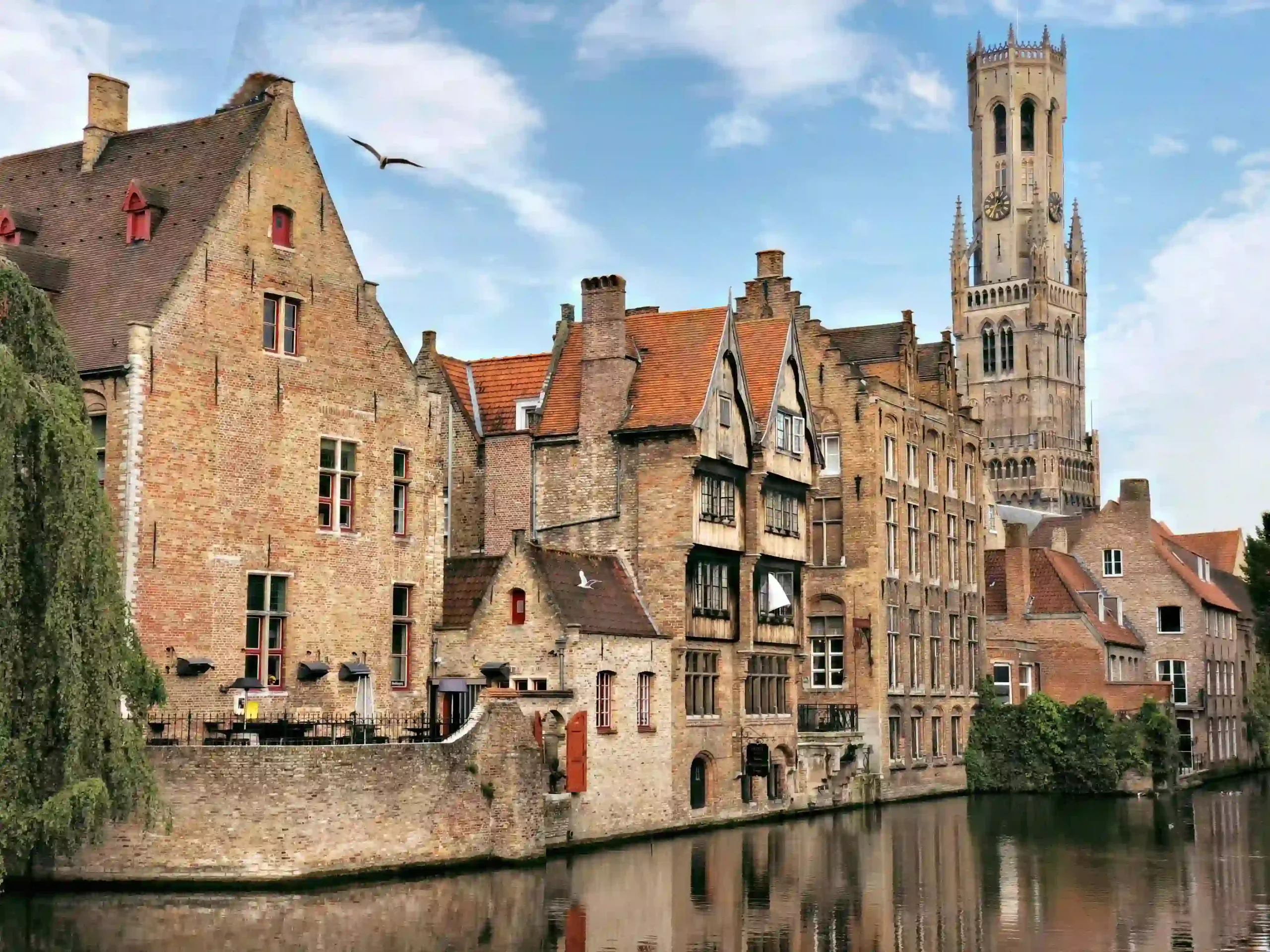
Bruges: the One You’ve Already Seen in Photos
At ten past eight in the morning, Rozenhoedkaai had maybe six people on it. The water was flat. It looked like the postcard, which is a strange thing to see in real life.
I came back at one o’clock. Three rows deep, umbrellas up on guide poles, everyone waiting their turn for the same photograph.
Both of those are Bruges. Which one you get is entirely down to timing.
The city’s real advantage is how small it is. Inside the historic centre you can put the map away: the Belfry and its 366 steps, the canals, the museums and what feels like four hundred chocolate shops are all within a short walk of each other. That compactness is why Bruges works as a day trip when bigger cities don’t. Our guide to a full day in Bruges maps out a route that avoids the worst of the queues, and the Visit Bruges official site has current opening hours.
Now the honest part. Between late morning and mid-afternoon, the centre can feel like a medieval theme park. Cruise passengers arrive from Zeebrugge in coachloads. Restaurants on the Markt charge Markt prices. Finding an empty stretch of canal becomes a small project.
Overrated? No. Just badly timed by most people who visit it. If you’re planning several museums, compare individual tickets with the Musea Brugge Card before buying.
Ghent: the One People Come Back To
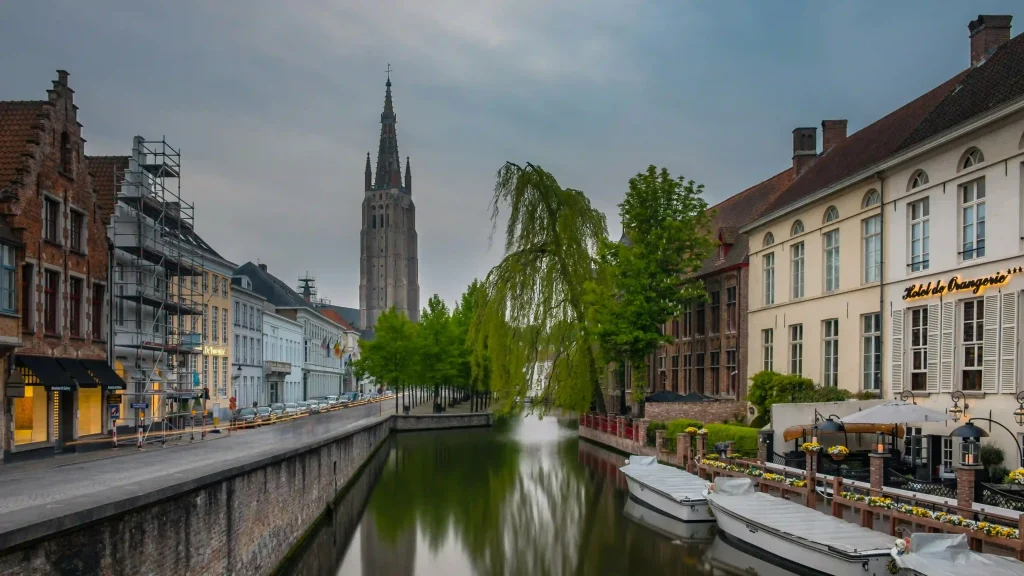
Ghent doesn’t announce itself. That’s the first thing.
There’s no single view that makes you stop and reach for your phone in the first ten minutes. Then somewhere around hour three you notice you’ve stopped looking for sights and started just being in the place, and that’s when it clicks.
Some numbers behind the feeling: over 40,000 students at the university, which means the centre stays busy in February, on a Tuesday, at nine in the evening. Nothing empties out when the tour groups leave, because they were never the main thing keeping the place busy.
The sights hold up too. Gravensteen is a genuine medieval castle in the middle of a city, torture collection and all. St Bavo’s has the Adoration of the Mystic Lamb. Graslei and Korenlei give you the waterfront that ends up on everyone’s camera roll. Ghent is also Europe’s unofficial vegetarian capital, which turns out to mean the food is good for everyone, not just vegetarians. What a day in Ghent looks like covers the route in detail, and Visit Ghent’s visitor information lists what’s on. Planning three or more paid attractions? Compare the individual prices with CityCard Gent first.
Ghent divides people, and it’s worth knowing why before you go. Arrive expecting a second Bruges and you may leave unimpressed. It’s bigger. Noisier. Industrial around the edges. But it’s also a city that belongs to the people living in it, and for a lot of visitors that ends up mattering more than perfect gables.
The Honest Bit
Ask me where I’d spend a free weekend and I’d say Ghent without pausing.
I’ve lost whole afternoons there. Coffee, a bench by the water, boats going past. Normally that would feel like wasting a city break. In Ghent it feels like the correct use of the day.
But that’s my trip, not yours.
If you’re seeing Belgium once in your life, you’re not looking for the city I return to. You’re looking for the one you’ve been imagining. That’s Bruges, and I’d send you there without contradicting myself, because those are two different questions with two different answers.
Side by Side
Still undecided? This quick comparison highlights the differences that matter most, making it easier to see which city is the better fit for your travel style and the kind of day you’re hoping to have.
Getting There (and Why Ghent Is Closer Than Most People Think)
Ask someone which city is the easier day trip from Brussels and most will say Bruges. It isn’t.
Ghent is about 30 minutes by direct train. Bruges is closer to an hour. Between the two cities it’s 25 to 30 minutes, several times an hour. Check train times between the two cities for your date, especially if you’re travelling late in the evening.
From the stations: Bruges is a 20-minute walk from the Markt, or a short bus ride. In Ghent, most people take the tram from Gent-Sint-Pieters, though walking it is fine if half an hour on foot doesn’t bother you.
Coming straight from an airport with luggage is where the journey gets less convenient, especially from Charleroi. Depending on the airport and your departure time, you may face a connection, a shuttle-to-train change or a long wait between services. If that’s your situation, a transfer to Bruges or a transfer to Ghent skips the changes entirely; which one you book simply follows whichever city you picked above.
Doing Both in One Trip
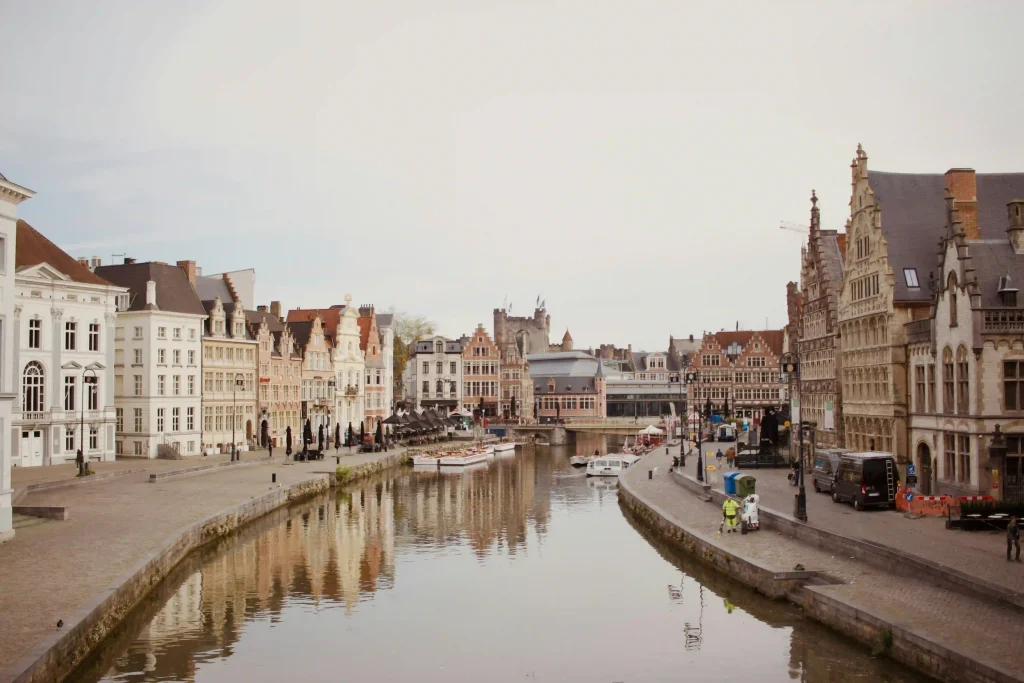
Can you do both in a single day? Technically yes. The train takes 25 minutes.
Don’t.
You’ll spend the day watching the clock, and you’ll come home with two half-visits instead of one proper one.
Two days works much better. Ghent on day one, when the evening atmosphere is at its best. Sleep in Bruges that night, so you wake up inside the historic centre. Then walk out at eight the next morning, before the first coaches arrive, and see the version of Bruges most day-trippers never get.
Flying home afterwards? Our guide to getting back to the airport afterwards covers the routes from both cities, and you can compare fixed transfer prices against train fares before you decide.
FAQ
Is Bruges or Ghent better for a day trip?
Bruges if it’s your first visit to Belgium and you want the canals and medieval streets you’ve seen in photographs. Ghent if you’ve already done Bruges, or if crowds tend to spoil a day for you.
How far is Ghent from Bruges?
About 25 to 30 minutes by direct train, several times an hour, which makes combining them over two days straightforward.
Can you visit Bruges and Ghent in one day?
You can. I wouldn’t. The journey is short, but fitting both into one day means rushing both.
Which is cheaper, Bruges or Ghent?
Ghent, mainly for food and drink in the centre. Ticket prices for the main attractions are broadly comparable, so the bigger difference is what you’ll spend between the sights.
You’ve Chosen the City. Now Choose the Journey.
The hard decision is behind you. The rest is just logistics, so book your transfer and spend the day in the city instead of the connections.